
Historic Places Shaped by Communication
Communication shapes how people connect across distance, cultures, and generations. From interpreters and traders to community leaders and storytellers, the sites on this Visit List reveal the many ways people have shared knowledge, built relationships, and preserved their histories. Whether through oral traditions, written words, transportation networks, or places of gathering, each site offers a unique perspective on communication across place and time.
Places
Beothuk Interpretation Centre
Boyd's Cove, Newfoundland and Labrador
300 years ago, Boyd’s Cove was a Beothuk village. Today the interpretation centre helps visitors learn about and connect with this history. Visitors are invited to pay their respects by leaving an offering in the Spirit Garden, creating a meaningful connection between past and present. Boyd’s Cove reminds us that while time may separate us from the Beothuk people, their stories continue to be shared, remembered, and communicated.
Hiscock House
Trinity, Newfoundland and Labrador
After the death of her husband Richard in 1893, Emma Hiscock was left to raise six children on her own. Rather than remarry, she transformed her home into a hub of business and community life. Emma operated a general store from the property, opened a post office, and rented part of the house to a bank. The Hiscock house became a place of community and connection. Today, visitors can explore the restored house and discover Emma’s impact.
Basin Head Fisheries Museum
Souris, Prince Edward Island
For generations, fishing has been an important part of life on Prince Edward Island, connecting costal communities to each other. At the Basin Head Fisheries Museum, visitors can explore the history of the province’s fishing industry through artifacts, photographs, and personal stories that reveal how knowledge and traditions were passed on. Today, the museum continues to preserve the voices and experiences of those who shaped PEI’s costal communities.
O’Dell House Museum & Genealogy Centre
Annapolis Royal, Nova Scotia
This museum was the former house of Cory O’Dell, a rider of the Nova Scotia Pony Express. Over May through September 1849, mail steamships would arrive in Halifax every week. The riders would pick up these news and rapidly travel distances. They carried news to Digby, then by ferry to Saint John, then by train or rider to the U.S. border where telegraph lines existed.
However, after the completion of a telegraph line from Saint John to Halifax, the Pony Express became obsolete.
McAdam Railway Station
McAdam, New Brunswick
Built in 1900 as part of the Canadian Pacific Railway’s main line into Atlantic Canada, the McAdam Railway Station was one of the region’s most important transportation hubs. The station’s telegraph office, mail facilities, and passenger platforms were all part of a communication network that shaped daily life in the early 20th century. The station is a beautifully preserved historic site where visitors can explore exhibits and discover how railways connected people across time and place.
Morrin Centre
Québec, Québec
The Morrin Centre has had a long life, once housing a prison, a college, and now a cultural centre. The building houses an exquisite Victorian library, home to thousands of books collected by the Literary and Historical Society of Quebec. These volumes preserve centuries of knowledge, ideas, and stories.
Messages can also be found in unexpected places, like the graffiti in the preserved jail cells. Visitors can tour the cells and explore the marks left behind by its past inhabitants. Together, the books of the library and the graffiti left by prisoners show how communication can come in many forms for many different reasons.
Diefenbunker: Canada’s Cold War Museum
Ottawa, Ontario
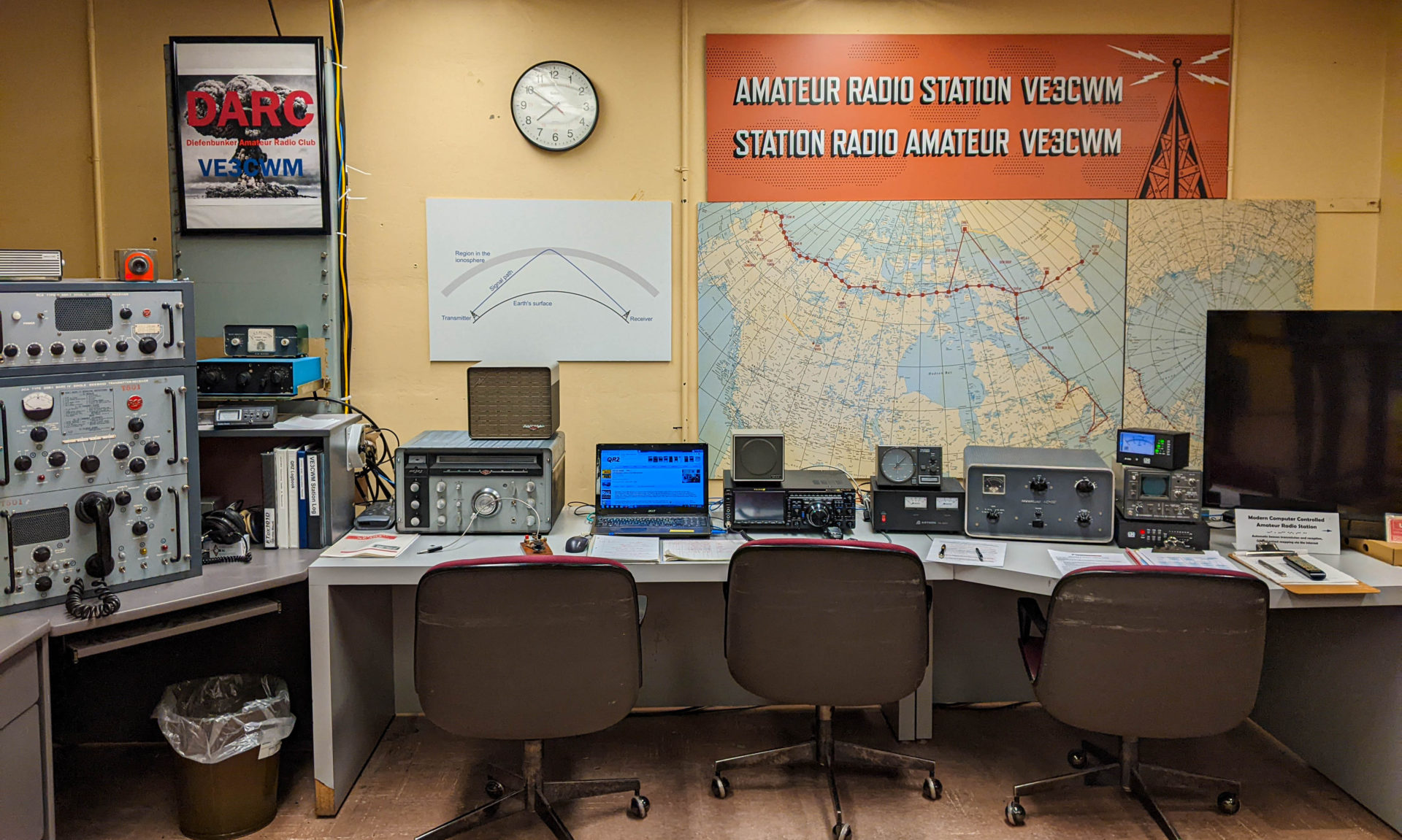
This bunker was equipped with the latest 1960s technology to ensure both underground governance and outside communication. To keep their location secret, the bunker was connected to five other satellite bunkers through 90km of copper wire. By relaying messages through these satellite bunkers, they made it seem like messages came from those bunkers.
They also used rotary telephones for uninterrupted communication, radio rooms, and the Top Secret Super Computer Room where signals could not leak in and where the military would communicate and process information between bases and Allied countries.
Toronto’s First Post Office
Toronto, Ontario
Back in the 1830s where letters were the only form of long-distance communication, the post office was an important financial and communications hub for the city’s 9,000 residents. The post office now operates as a museum, run by the Town of York Historical Society, to share stories of the old Town of York and the early days of Toronto.
Fort la Reine Museum
Portage la Prairie, Manitoba
Fort la Reine Museum is a living history site with more than 25 heritage buildings, tracing prairie life from early Indigenous presence and fur trade networks through mid-20th century rural communities. This site offers a record of how communication and community formed in the Prairies, from Indigenous trade routes to print culture and rail networks.
Duck Lake Regional Interpretive Centre
Duck Lake, Saskatchewan
Duck Lake Regional Interpretive Centre focuses on Saskatchewan history from the late 19th to early 20th centuries, with particular emphasis on the North-West resistance of 1885. The site helps visitors understand how messages, decisions, and alliances moved between Indigenous communities and the federal government, often across vast distances and under immense pressure.
Métis Crossing
Smoky Lake, Alberta
Métis ancestors served as guides, interpreters, and negotiators for major trading companies, such as the Hudson’s Bay Company and the Northwest Company. Their language, Michif, combined both Cree and French elements to create a unique linguistic heritage. This site is designed to engage visitors with Métis history, offering a wide variety of events to participate in.
Chinese Canadian Museum
Vancouver, British Columbia
The museum’s exhibit The Paper Trail to the 1923 Chinese Exclusion Act demonstrates that paper was used as both a tool of communication and used for control. The Canadian government had issued specific identity papers (CIs) to control, contain, discourage and exclude Chinese Canadians.
The registration required any Chinese Canadian wishing to leave and re-enter Canada to bring in their landing certificate, present it and go through an interrogation. If they were approved, the back of those certificates would be stamped.
Old Log Church Museum
Whitehorse, Yukon
Built in 1900, this church offered a place of worship in the community at a time when Yukon was rapidly changing. Today, the Old Log Church Museum brings together photographs, artifacts, and oral histories that trace encounters between missionaries, explorers, whalers, settlers, and Indigenous peoples. It is a space where voices from different regions of the Yukon are brought into conversation with each other.
Road Map
Boyd's Cove, Newfoundland and Labrador to Whitehorse, Yukon
Popular VisitLists
Atlantic Canada’s Hidden Histories
Shelburne, Nova Scotia to Dorchester, New Brunswick 64 places
geocaches that demonstrate the rich, diverse histories of Atlantic Canada.
View VisitList
Discover Niagara’s Early Settlers
Grimsby, Ontario to St. Catharines, Ontario 7 places
Take a trip back in time and explore the stories of Niagara’s early settlers.
View VisitList
Discover your inner viking
Gimli, Manitoba 1 place
We tell the story of the settlement of the New Iceland !
View VisitList
Built Heritage
Annapolis Royal, Nova Scotia to Middleton, Nova Scotia 5 places
Built heritage in Annapolis Royal, Bridgetown, and Middleton, Nova Scotia.
View VisitList


