
On the north shore of the Hayes River, eight kilometres upstream from Hudson Bay, York Factory was once a series of fur-trading posts established in the late 17th century by the Hudson’s Bay Company. Between 1684 and 1957, York Factory served as a trading post, distribution point and administrative centre for a vast network of fur posts throughout the West.
At its peak in the 1860s, the community that comprised York Factory had grown to over fifty buildings, reflecting the specialized activities and hosting a large complement of officers, clerks, labourers and a seasonal workforce of Indigenous traders and hunters. York Factory served many duties in its 273 years of operation, shifting from a fur-trade post to a warehousing and transshipment depot.
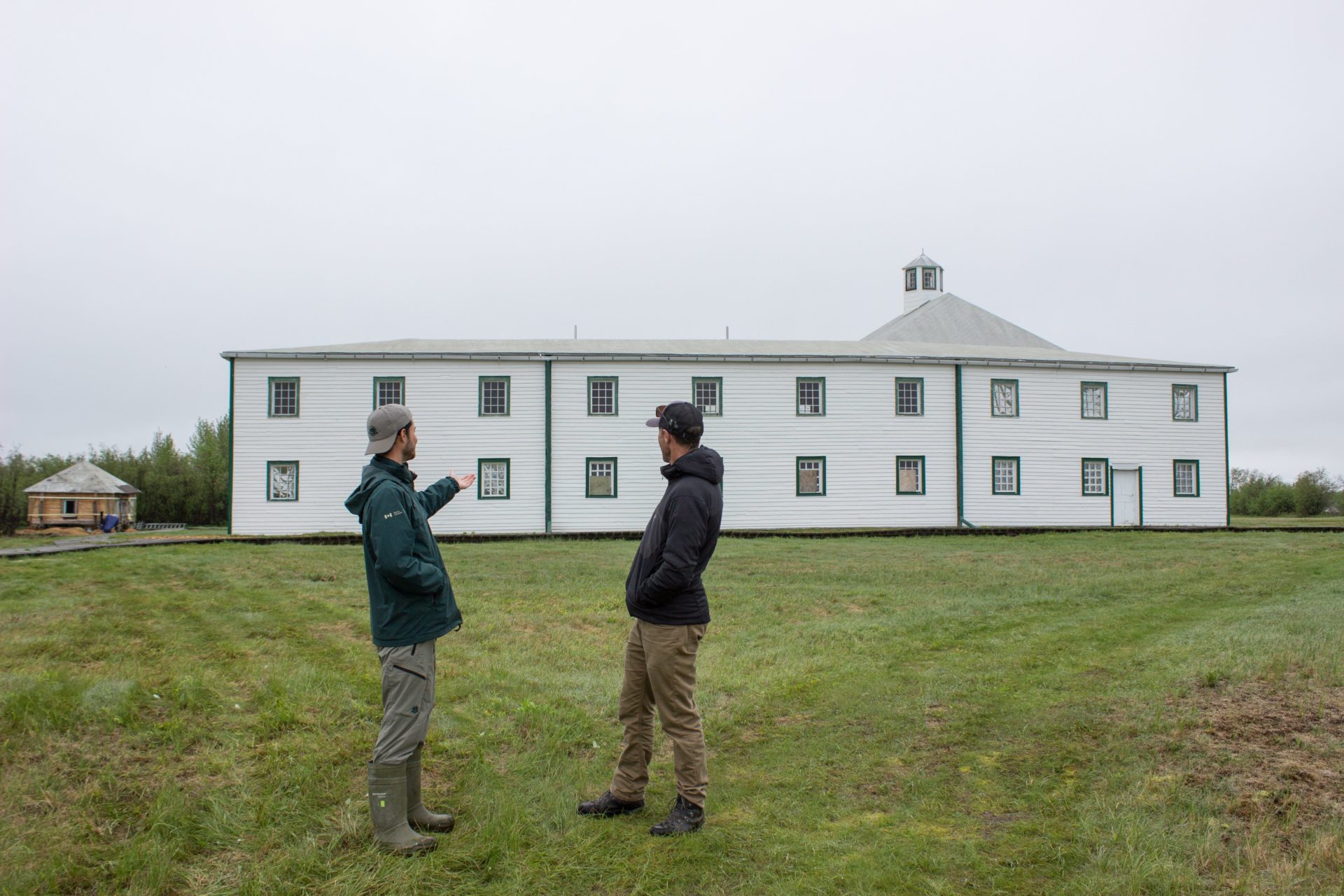
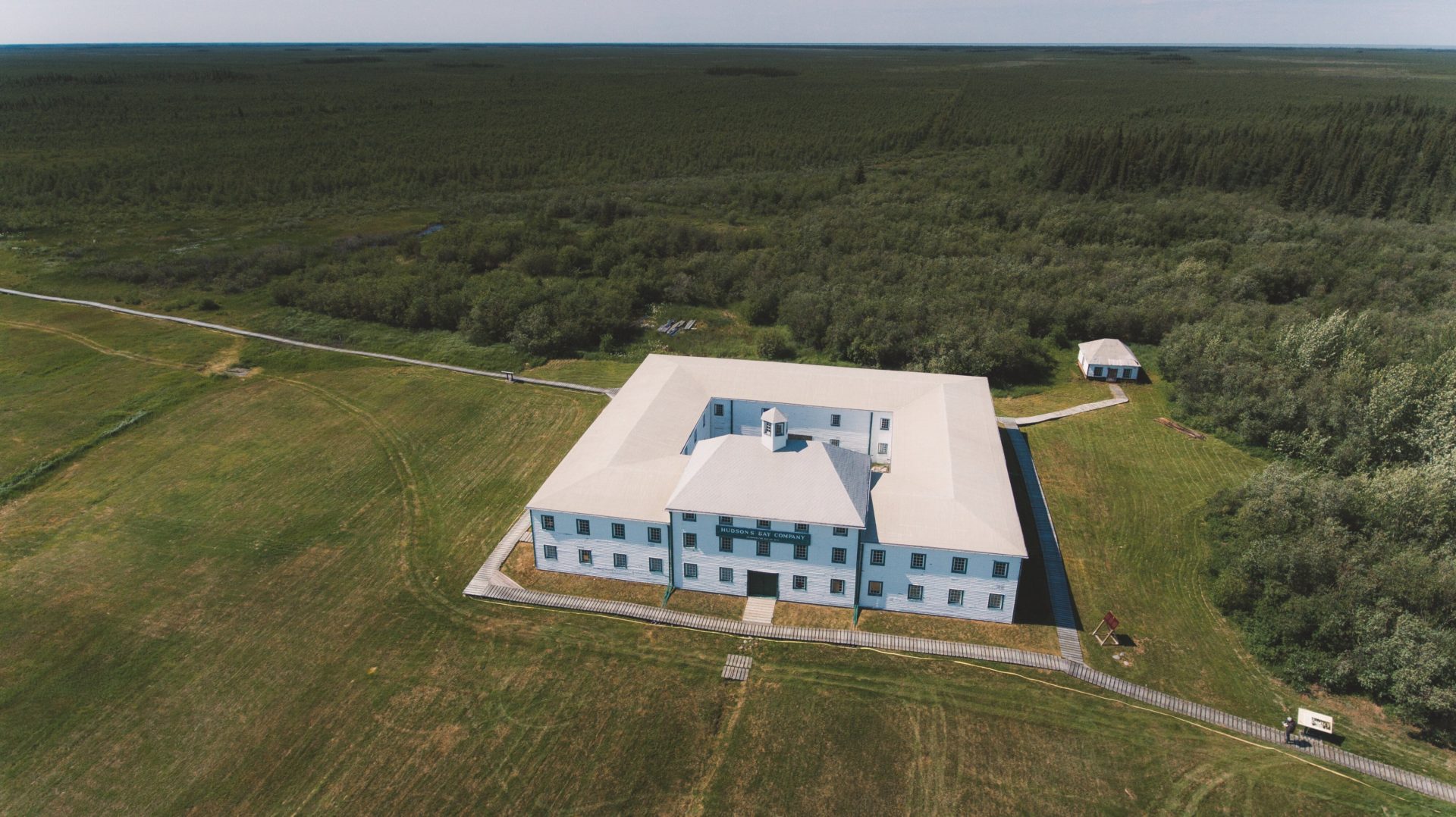
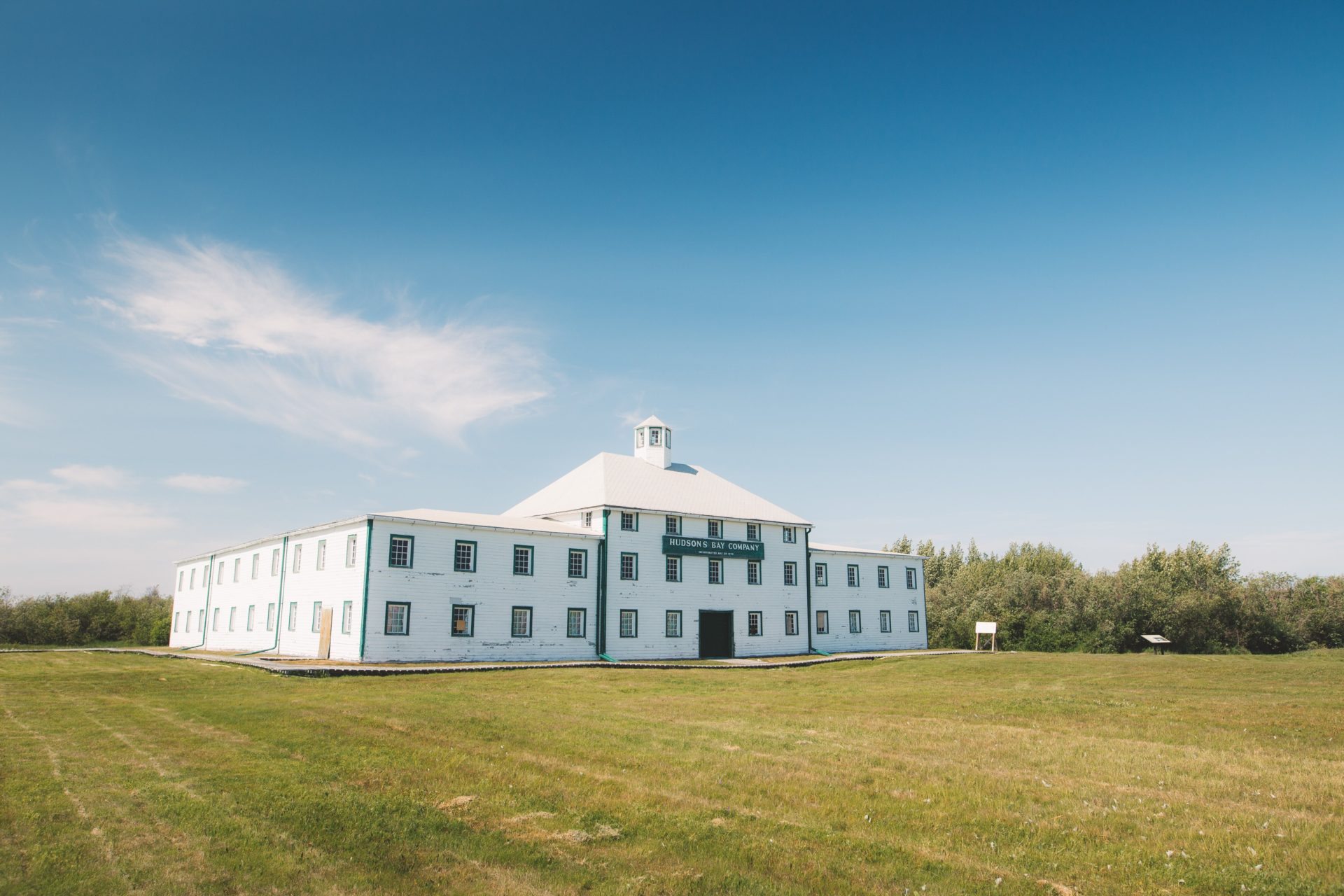
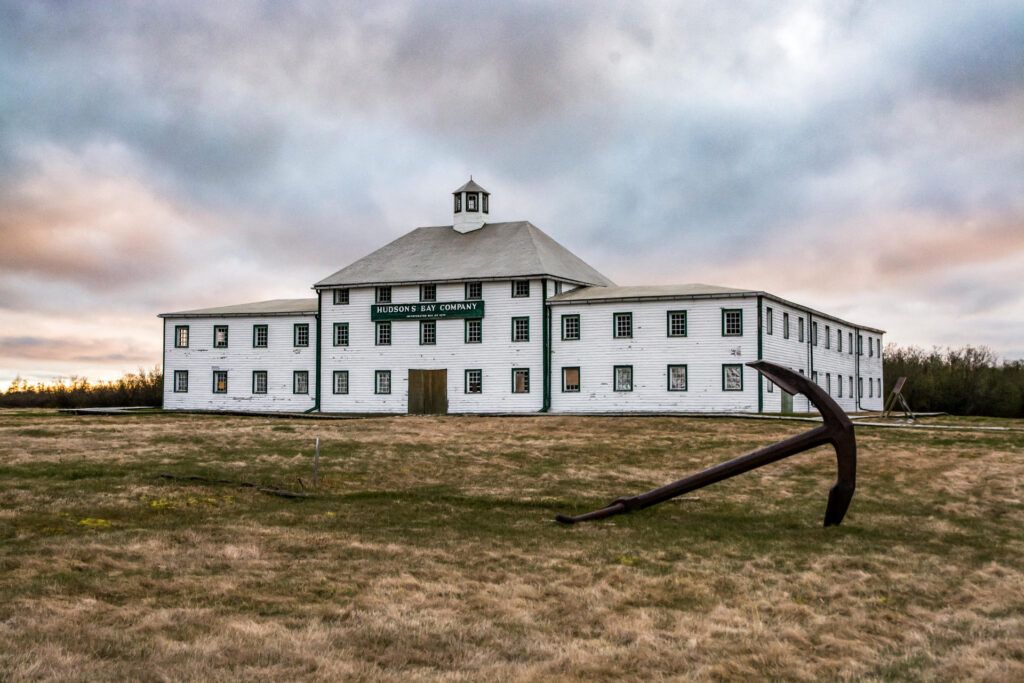
What remains of the factory to this day is a massive three-story complex standing alone on the vast tundra. Its visitors can admire the vestiges and graffiti of yesteryear on the wooden walls and take the sidewalks above the marshy ground to the ruins of a powder magazine and a cemetery—echoes of a once-thriving trading community.
Once a major administrative and supply centre for the Hudson’s Bay Company, York Factory connected far‑reaching trade and communication networks. Letters, records, and schedules passed through this remote location, linking Indigenous trading routes with global markets and decision‑making far beyond the region.
Manitoba’s rivers served as York Factory’s most crucial communication network, transporting product and people by York boat between settlements.
Only two buildings, two visible ruins, a cemetery, vestigial remnants of planned landscapes and extensive archaeological remains exist today of what was once a large complex.
A remote piece of Canadian history, visitors to the site must arrive by helicopter, boat, canoe or kayak to experience the wealth of relics and stories found on the shore of the Hayes River.