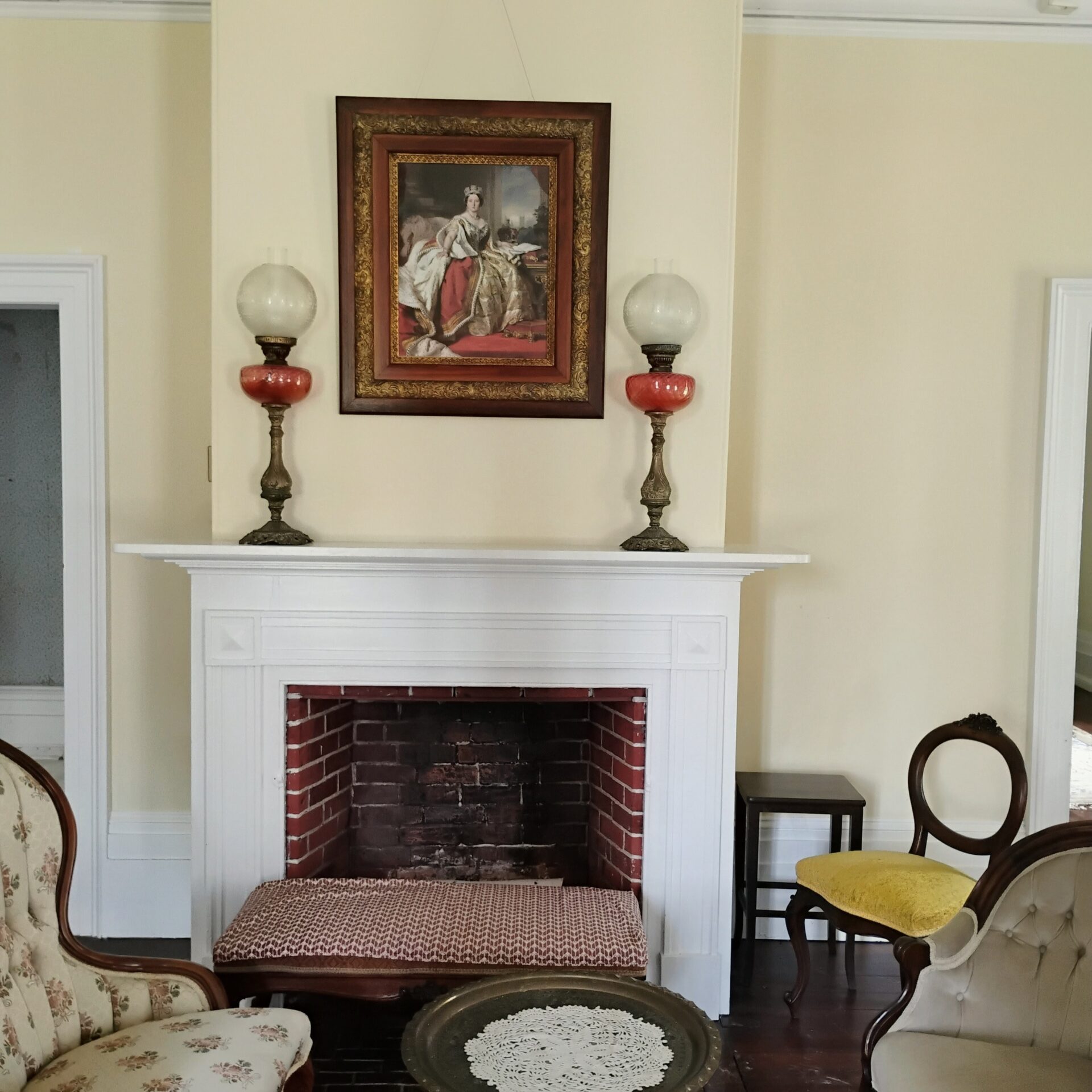
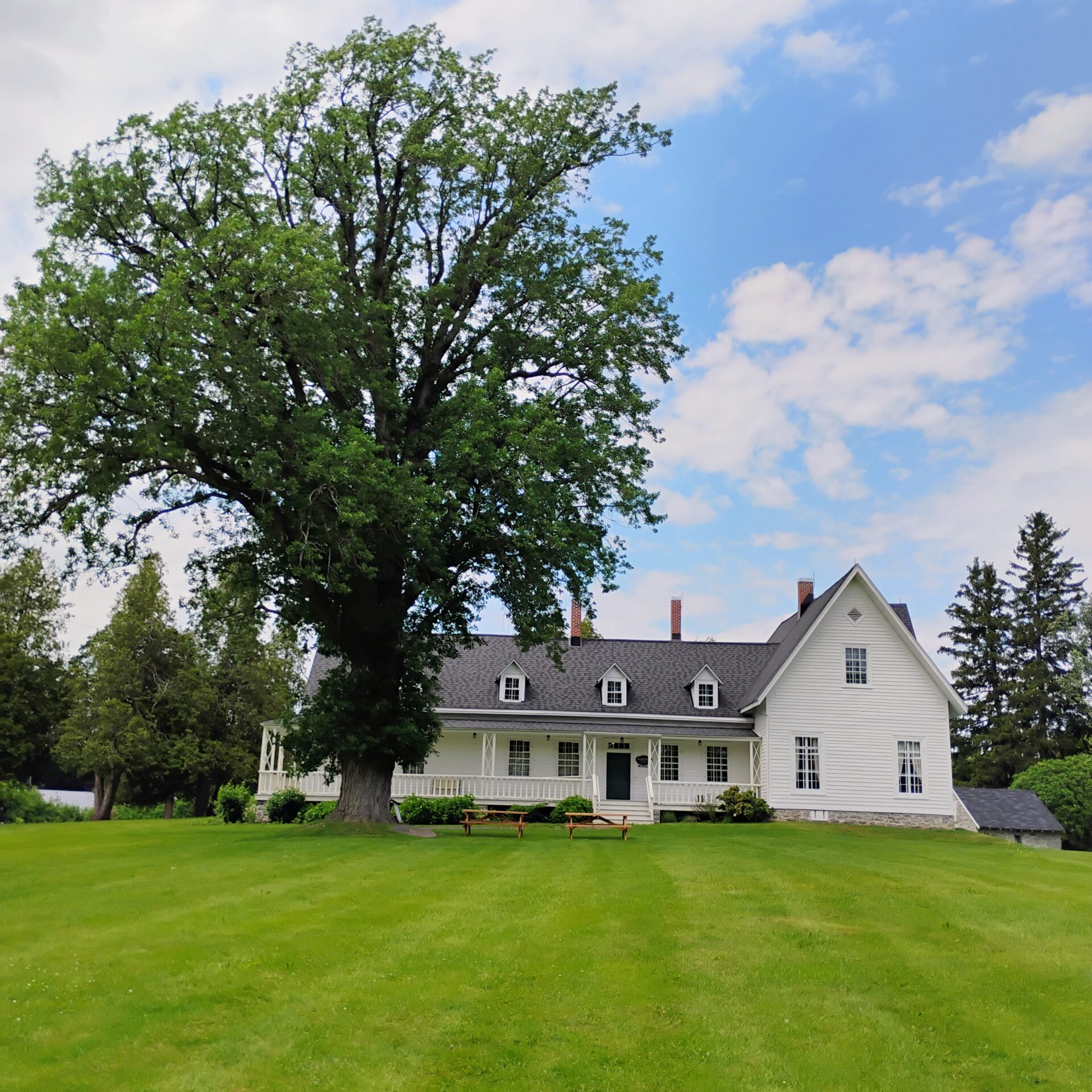
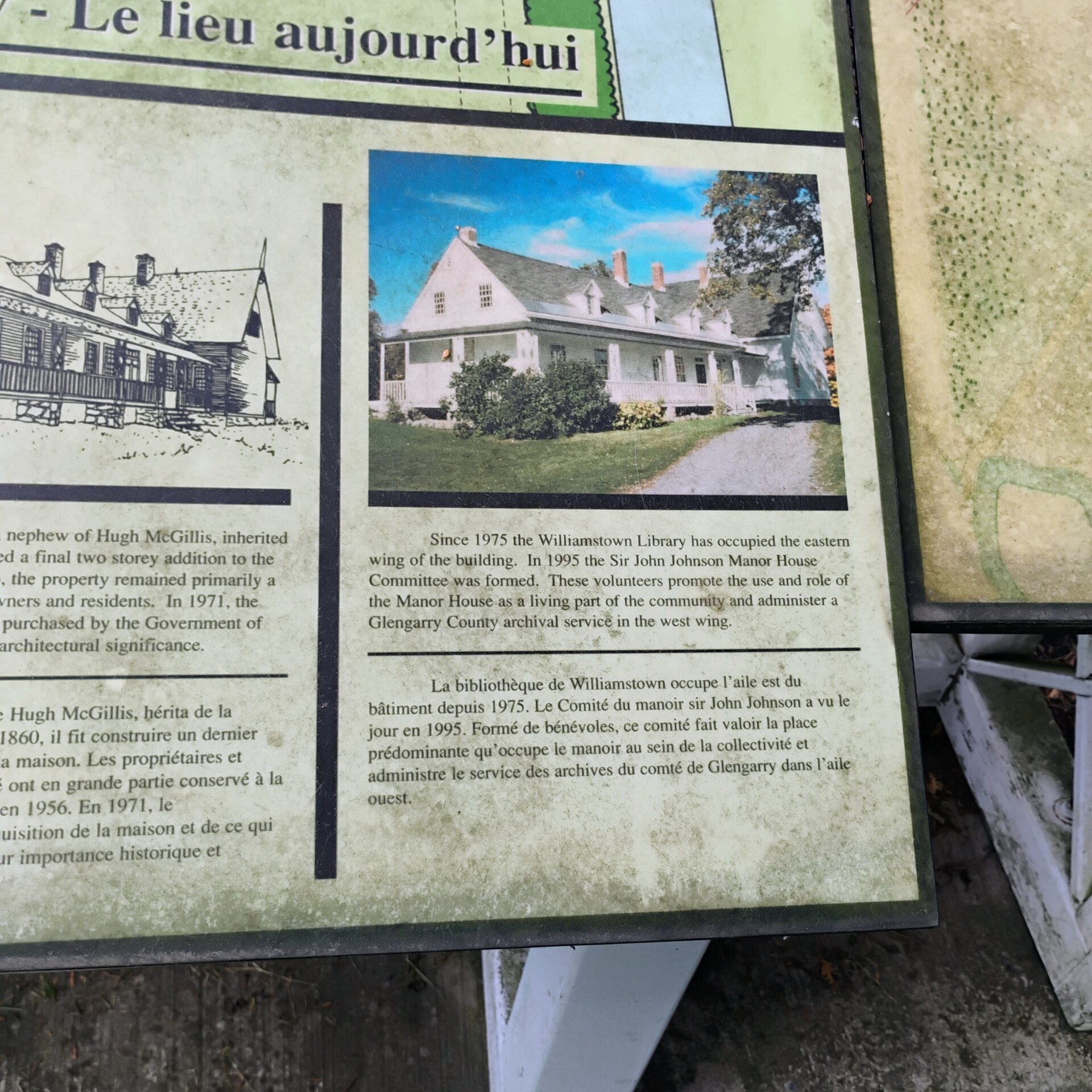
The national historic significance of the Sir John Johnson Manor House lies in its historical association with Sir John Johnson, its age as one of the oldest surviving buildings in Ontario, and in its architectural design.
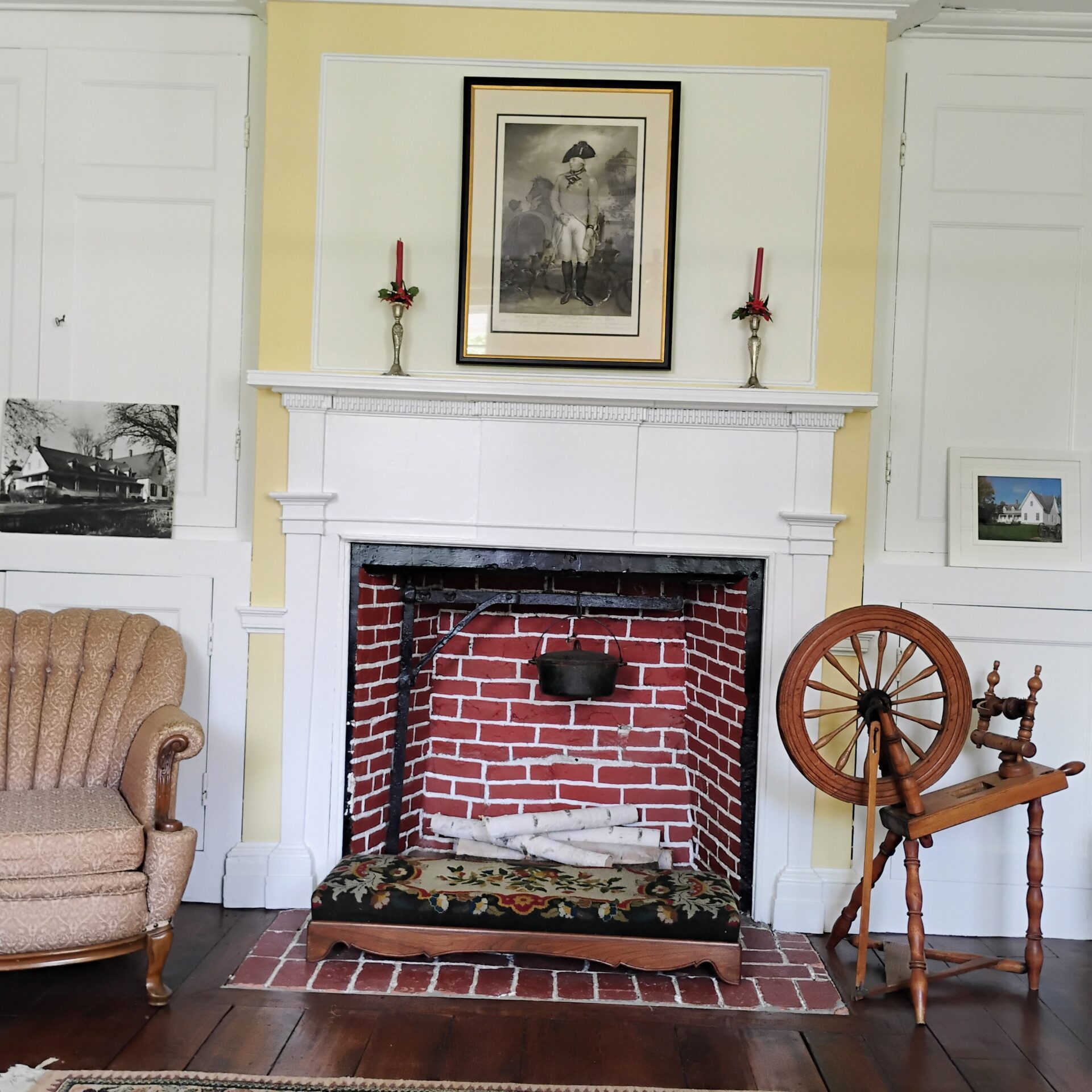
Sir John Johnson was born in 1741, the son of Sir William Johnson, Superintendent of Indian Affairs for the Northern Department of British North America. Through his father, John Johnson developed strong relationships with the Indigenous people, earning their trust and respect through diplomacy and fair dealings. Following his father’s death, Johnson inherited extensive lands and responsibilities in the Mohawk Valley of New York.
In 1776, at the start of the American Revolutionary War, Sir John Johnson left his substantial estate in the Mohawk Valley and came to Canada after remaining loyal to the British Crown. During the war, he organized, funded, and commanded the King’s Royal Regiment of New York, a Loyalist regiment involved in numerous military campaigns and border engagements. His leadership and service to the Crown helped protect Loyalist settlements and maintain British influence in the region throughout the conflict.
Johnson’s close relationships with Indigenous allies were instrumental during the war. Because of the respect he had earned among Indigenous communities, he worked closely with the Indigenous leaders and later succeeded his father as Superintendent General and Inspector General of Indian Affairs for British North America. In this role, he became one of the most influential figures in Upper Canada, helping to maintain alliances between Indigenous nations and the British government during a critical period in Canadian history.
In 1784, following the end of the American Revolutionary War, Johnson became responsible for the settlement of Loyalists who had fled the newly formed United States. He oversaw the establishment of communities in the area extending from Lake St. Francis to the Bay of Quinte. As a reward for his military and administrative service, he received extensive land grants, including property in what is now Williamstown, Ontario.
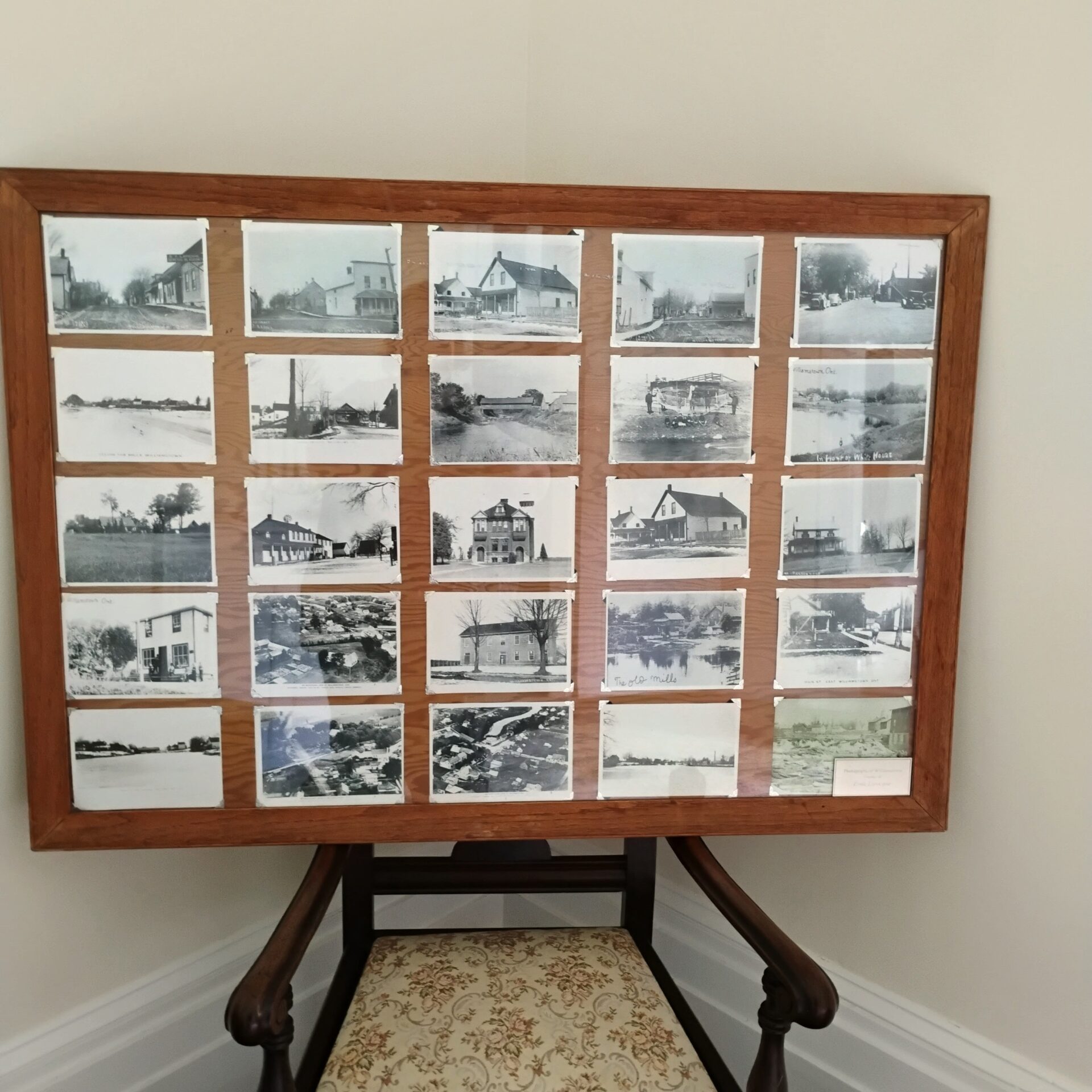
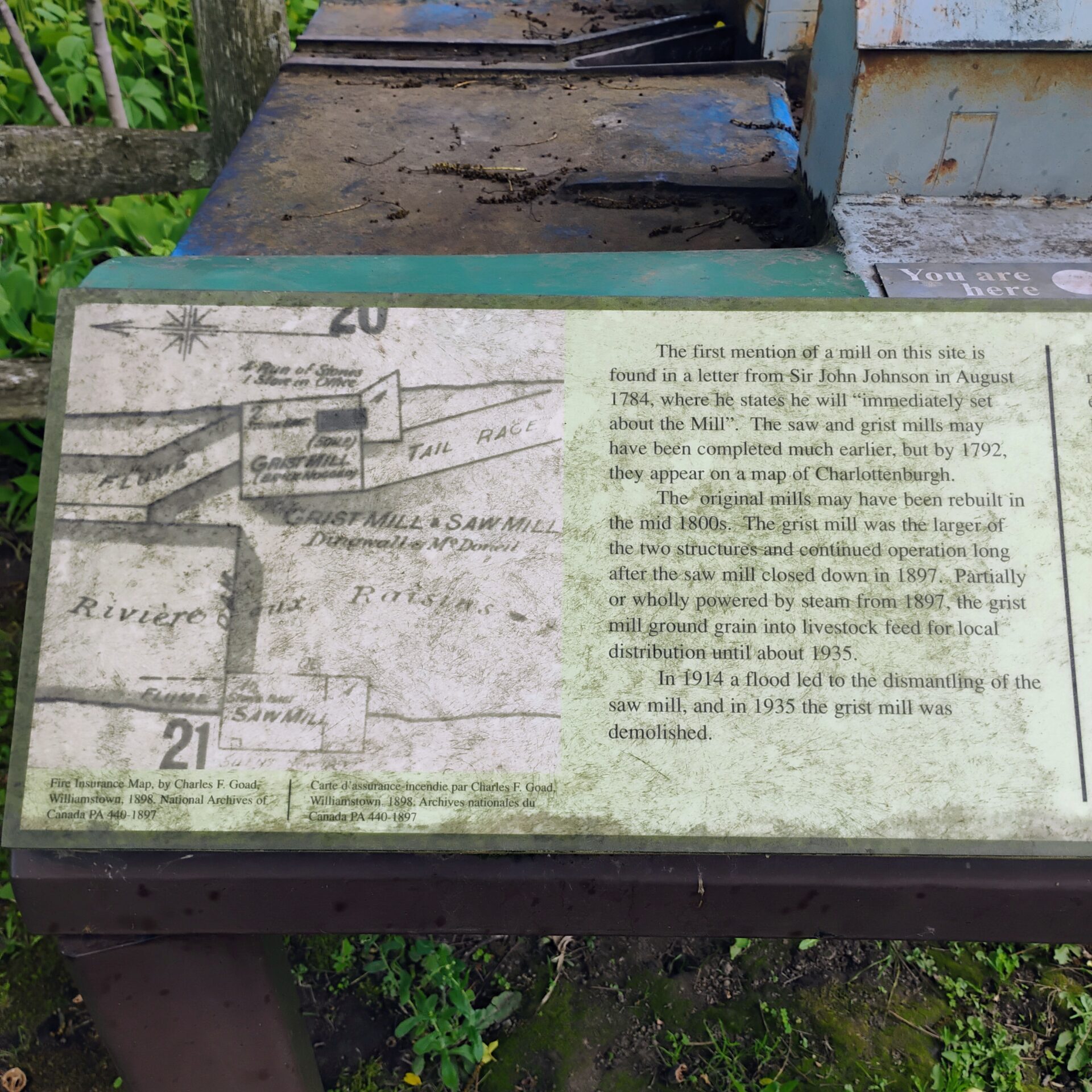
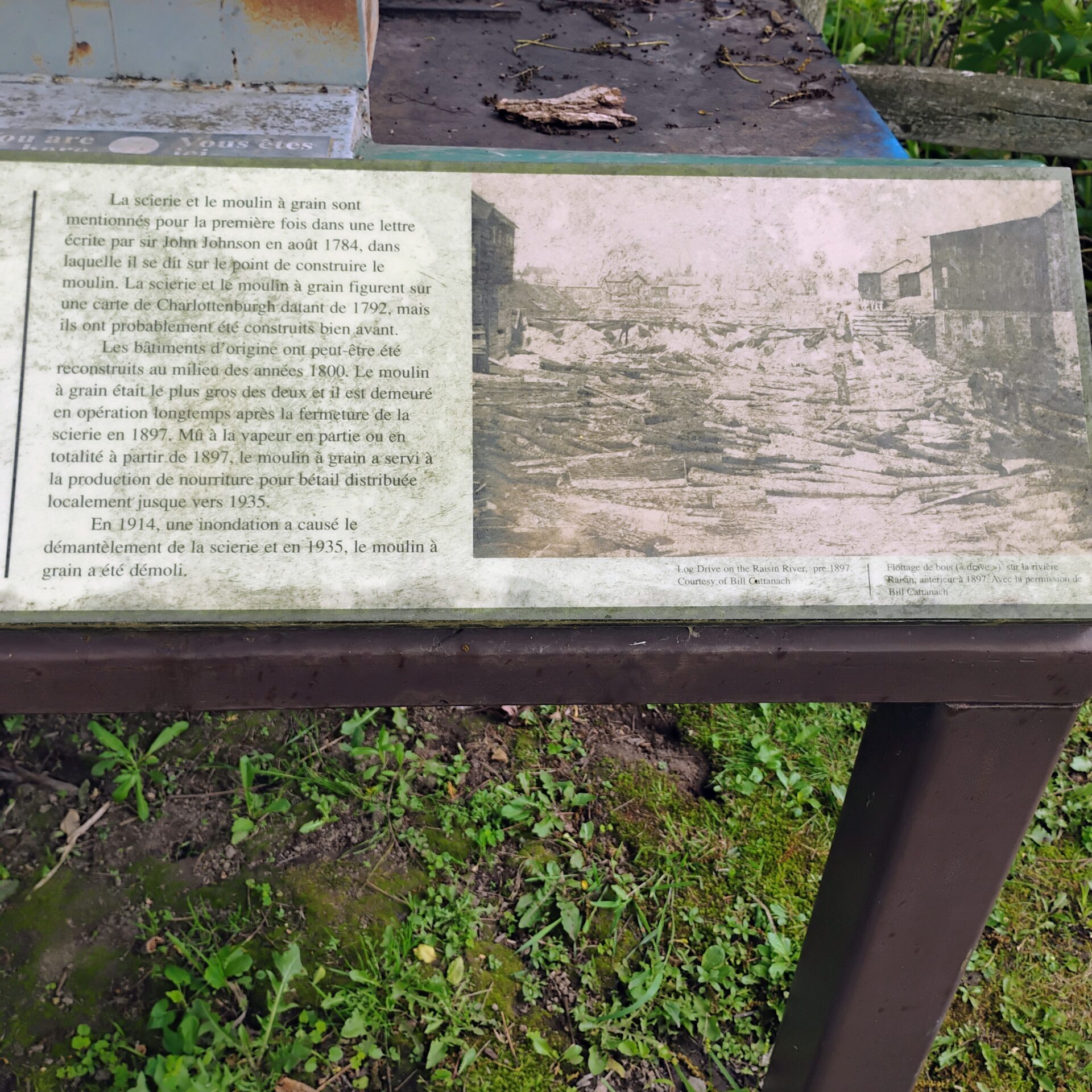
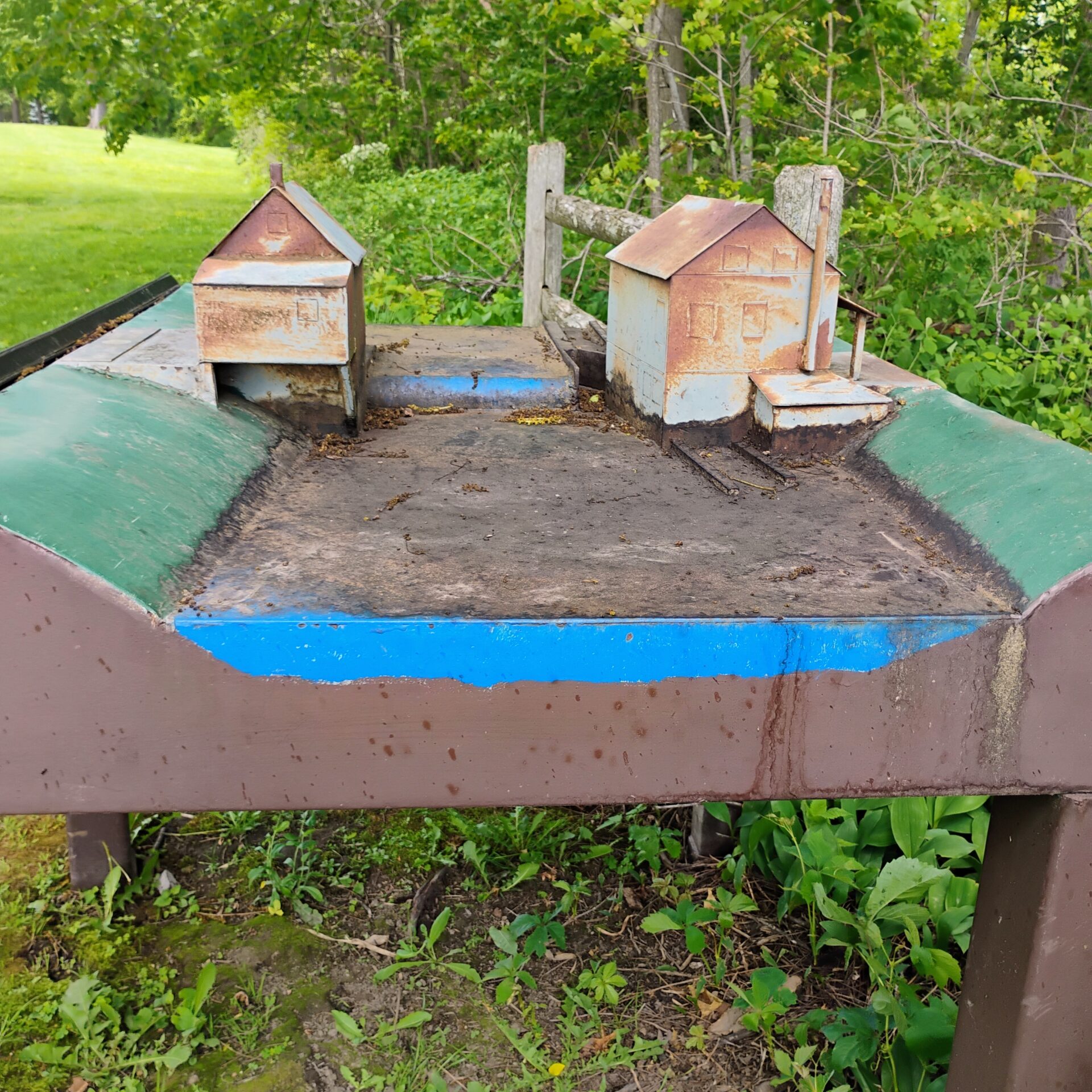
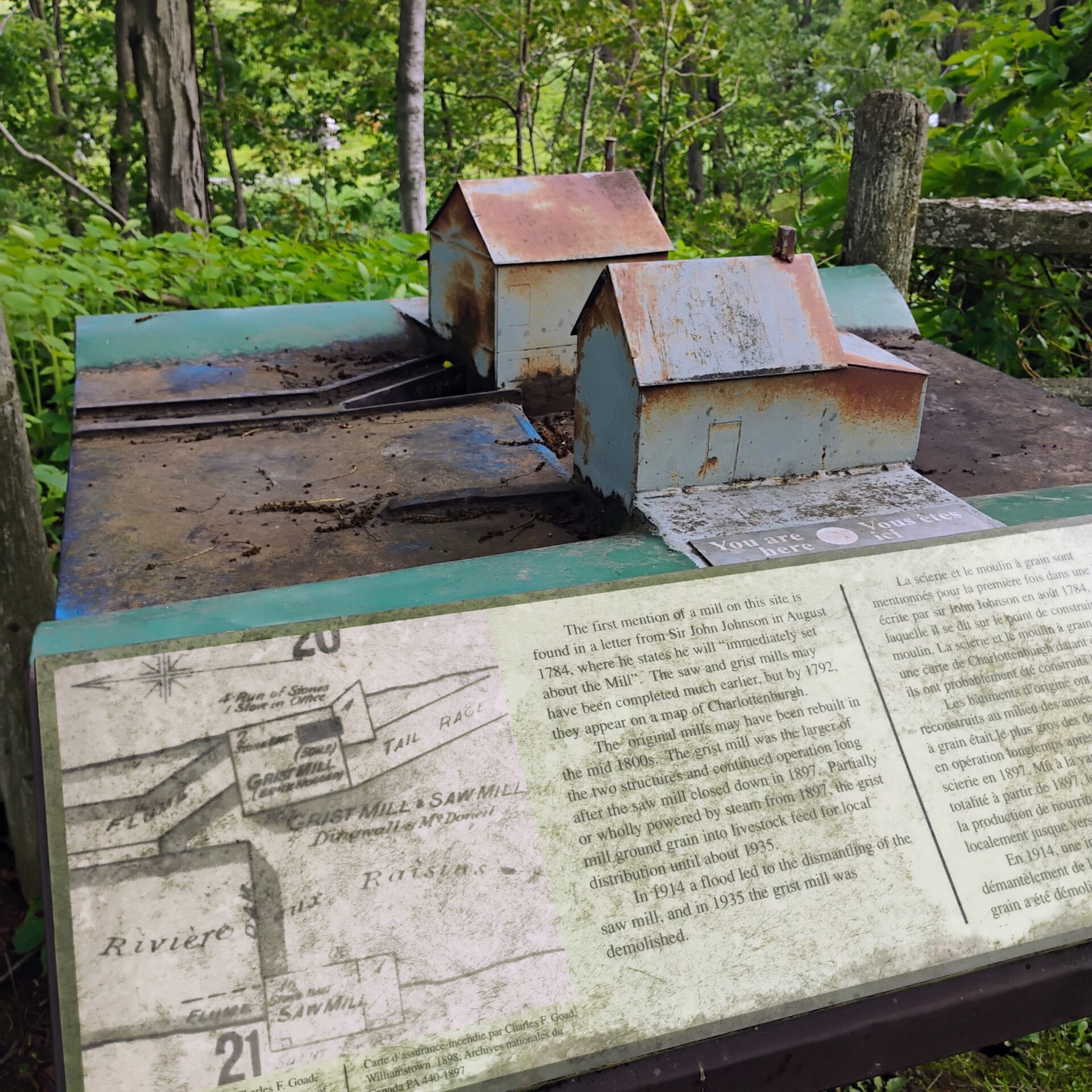
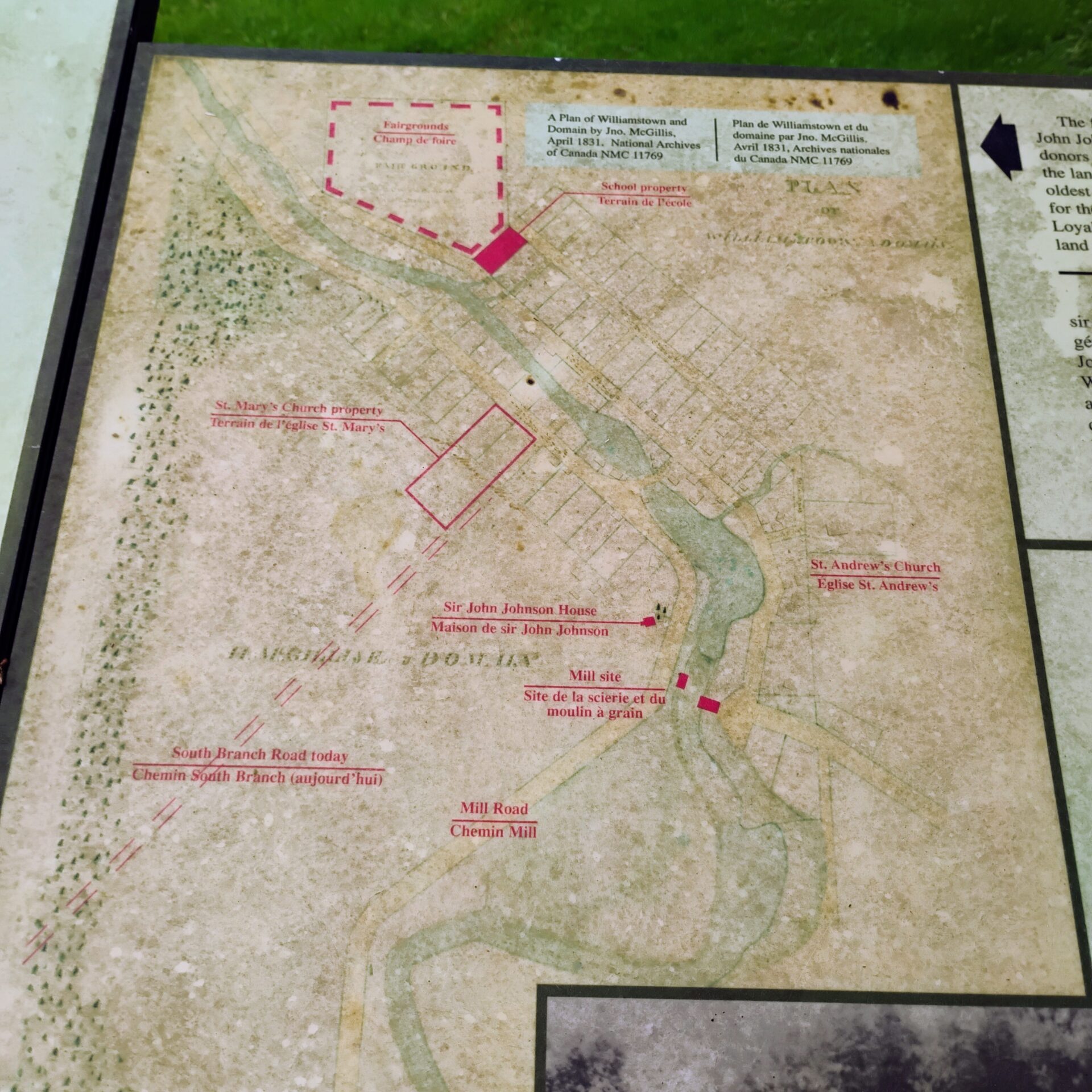
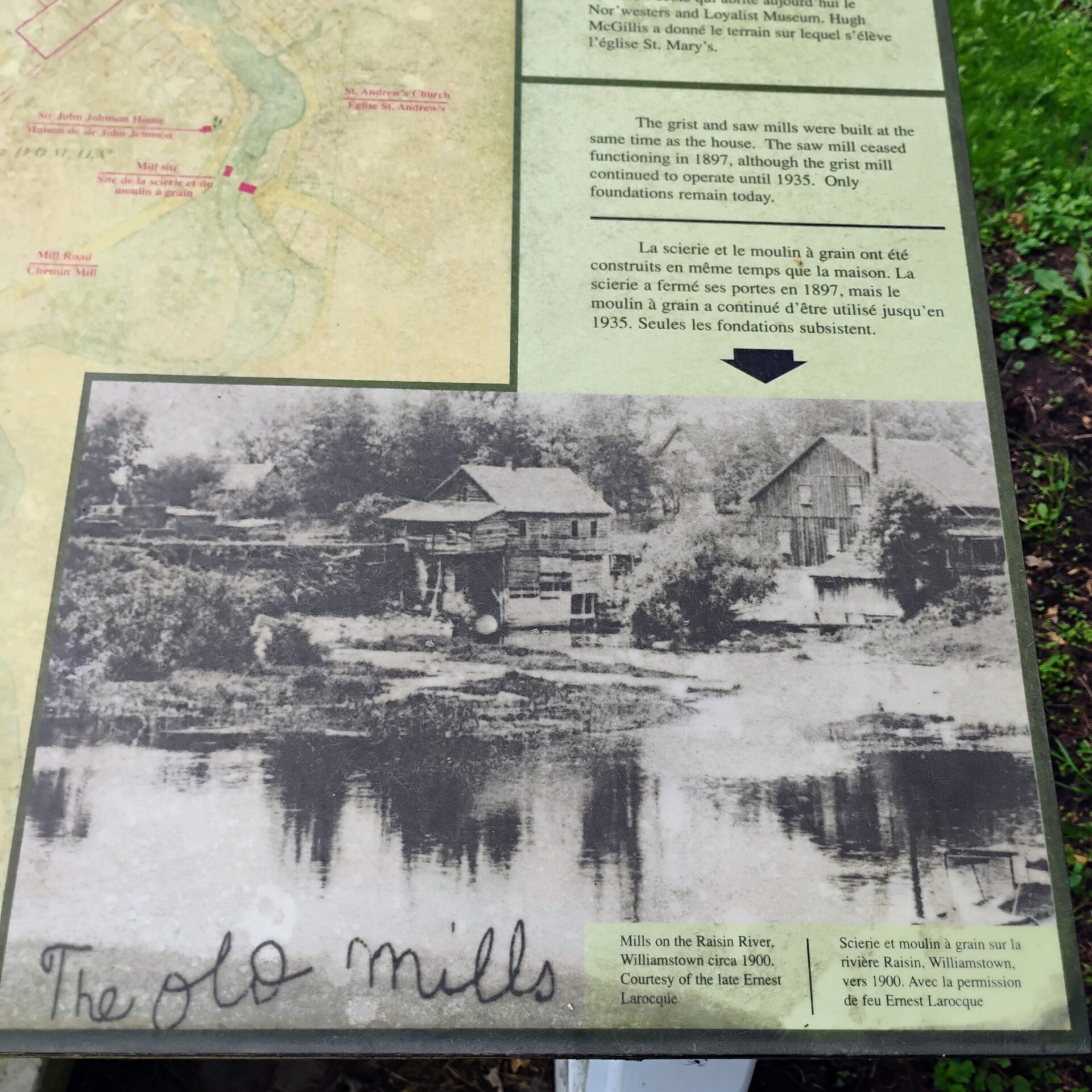
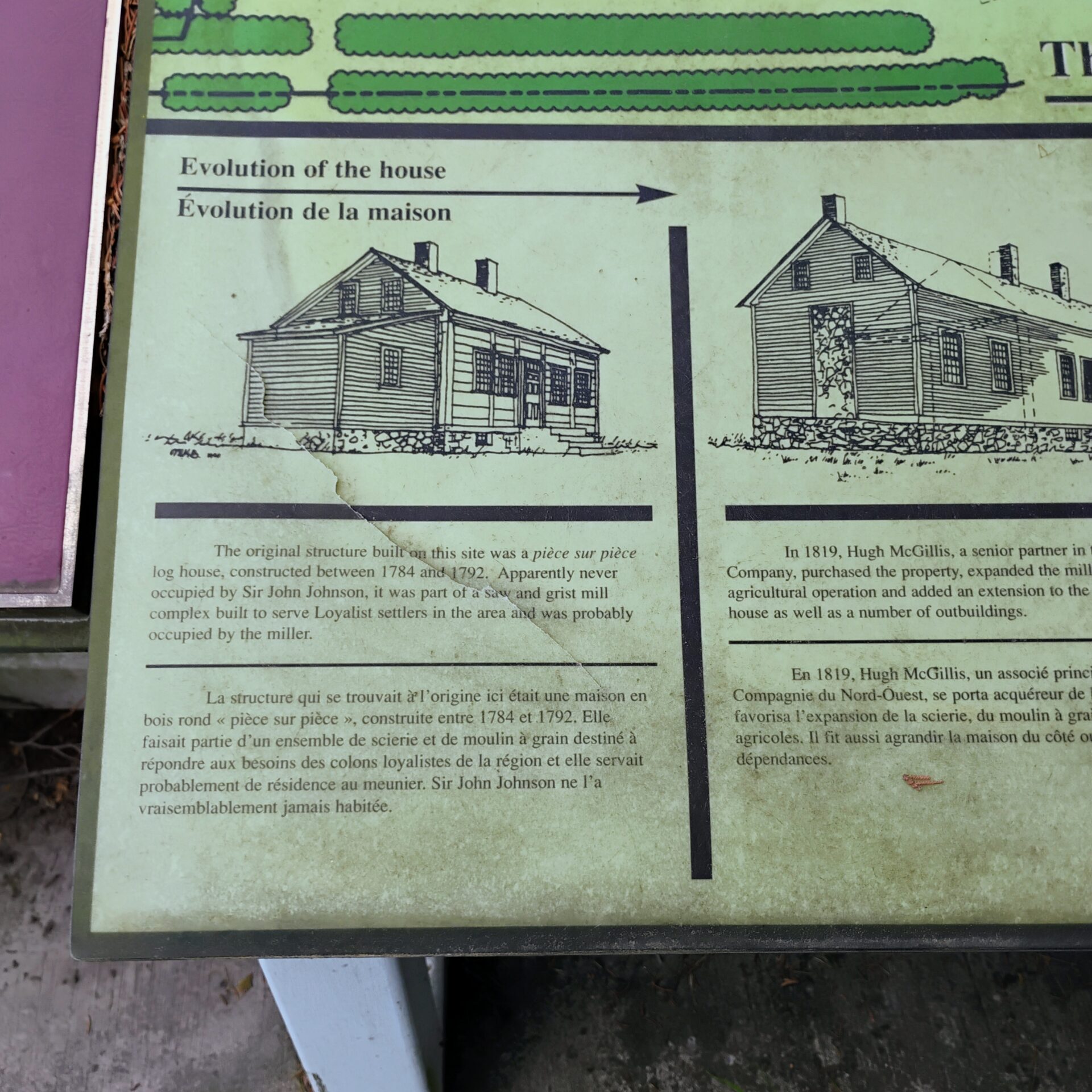
On his Williamstown property, sometime between 1784 and 1792, Johnson had built a one-and-a-half-storey, five-bay log structure on a rise of ground near the Raisin River. A grist mill and a saw mill were also constructed on the river during the same period. These mills became the centre of economic activity for the growing settlement and reflected Johnson’s vision of creating a thriving Loyalist community. The mills attracted settlers, provided essential services, and helped establish Williamstown as one of the earliest communities in Upper Canada.
While there is little evidence to suggest that Johnson ever permanently lived in his Williamstown house, the mills were the focal point of the community he hoped to encourage at that location. The house was occupied by the overseer of the mill for at least part of Johnson’s ownership of the site. The features which can be associated with this period include the original portion of the house and the sites of the former mills.
Sir John Johnson’s influence extended beyond Williamstown. Through his military leadership, public service, and efforts to settle Loyalists, he played a significant role in shaping the early development of Upper Canada. The Manor House stands today as a reminder of the Loyalist era, the founding of Williamstown, and the contributions of one of the most important figures in the early history of Ontario.
Fun Facts
One of Ontario’s Oldest Surviving Buildings
The Sir John Johnson Manor House was built between 1784 and 1792, making it one of the oldest surviving buildings in Ontario.
Built by a Prominent Loyalist Leader
The Manor House was built by Sir John Johnson, one of the most important Loyalist leaders in Canada. He helped thousands of Loyalists settle along the St. Lawrence River after the American Revolution.
The House Has Changed Over Time
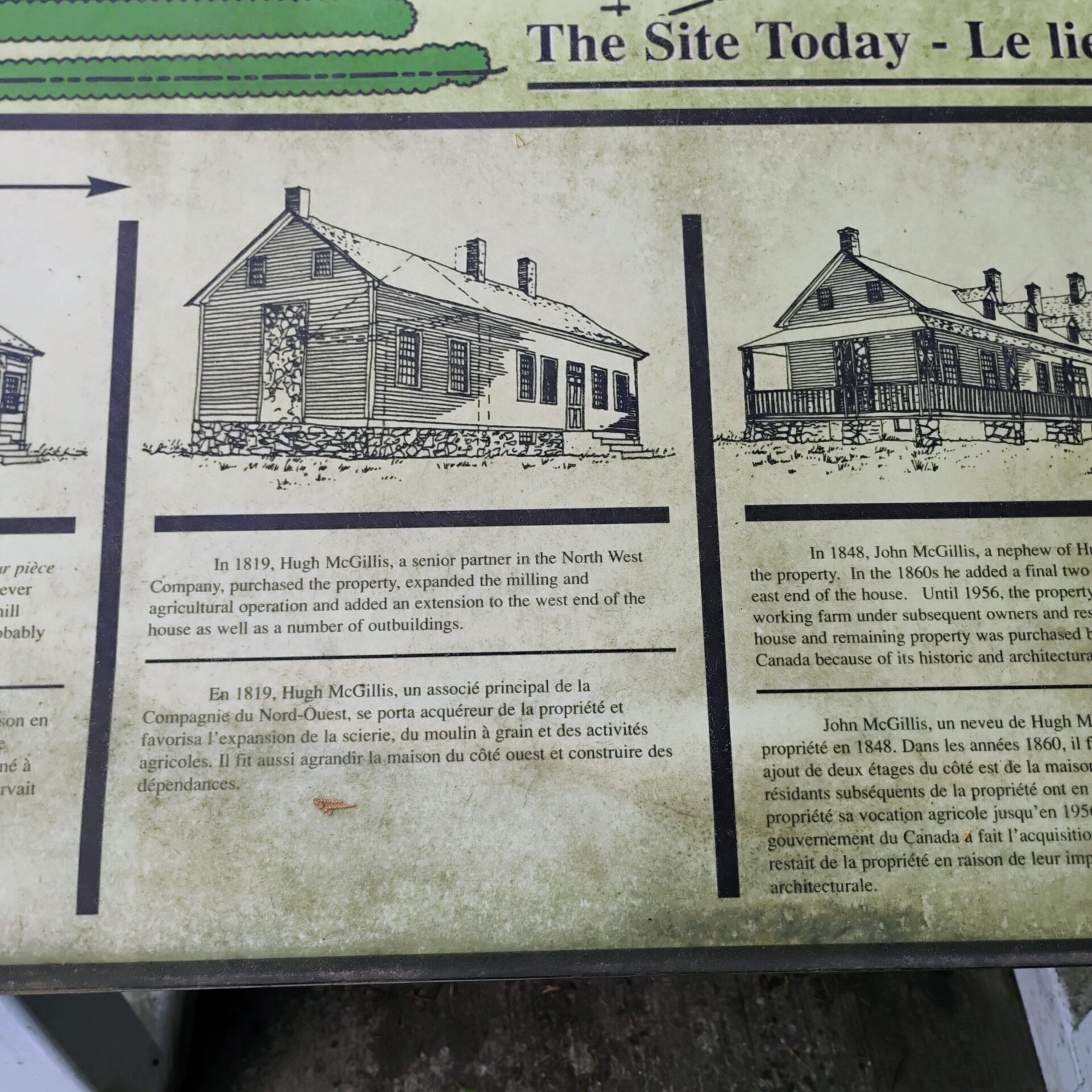
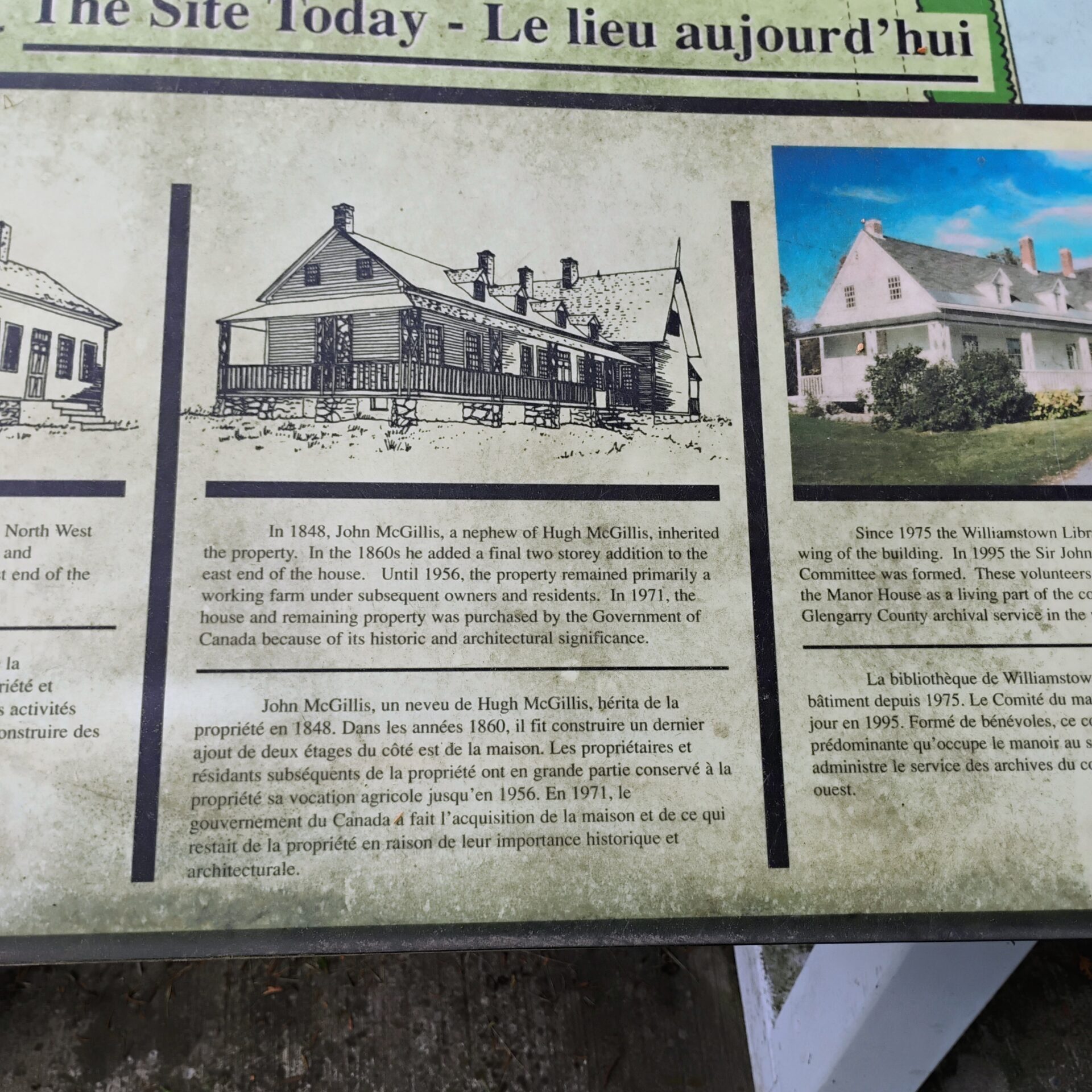
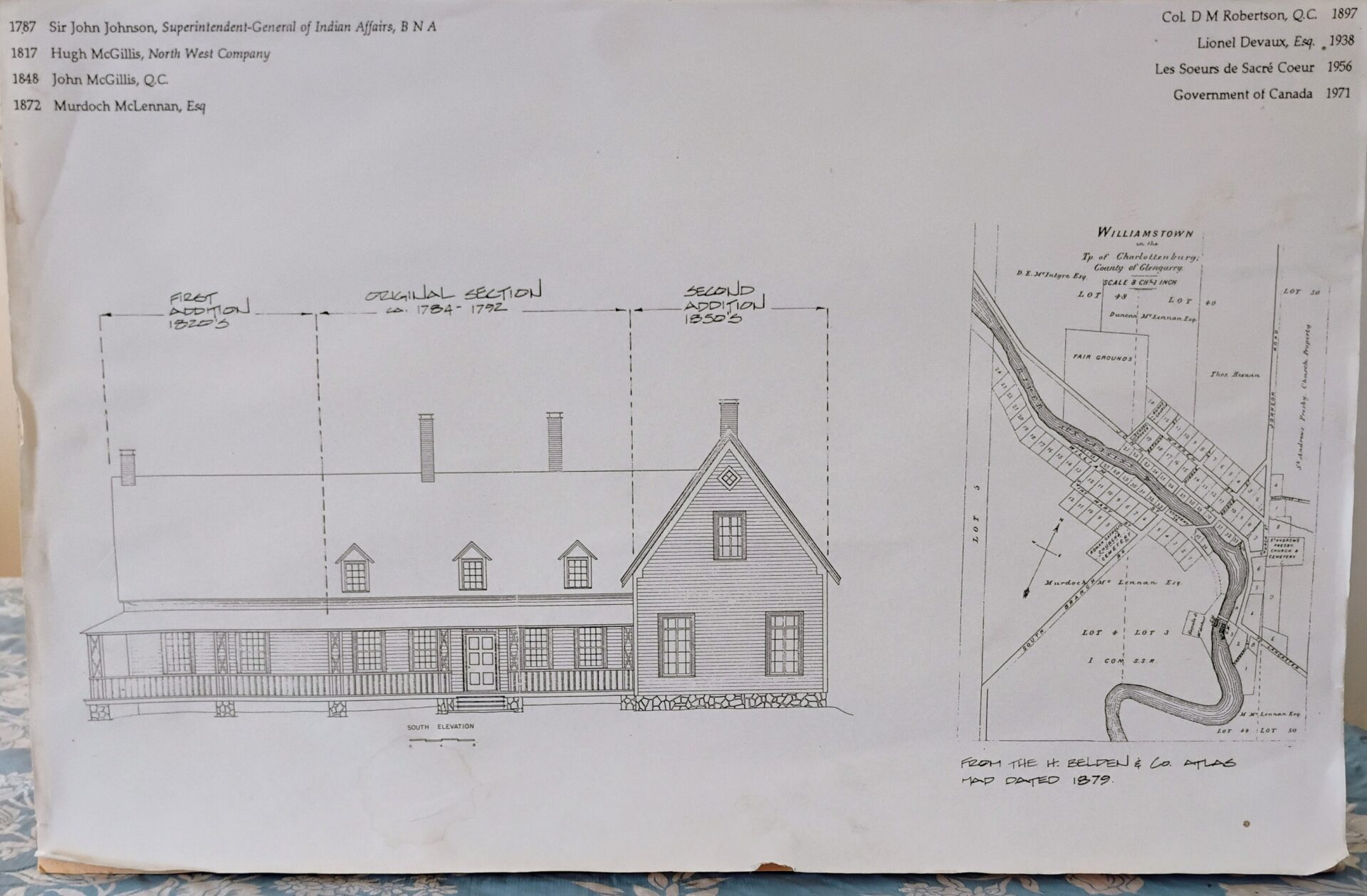
The Manor House you see today is not exactly what it looked like in 1784. Several additions were made over the years:
– 1784–1792: Original section constructed
– 1820s: West wing added
– 1850s: East wing added
Ownership Through the Years
Owner | Years |
Sir John Johnson | 1787–1817 |
Hugh McGillis | 1817–1848 |
John McGillis | 1848–1872 |
Murdoch McLennan | 1872–1897 |
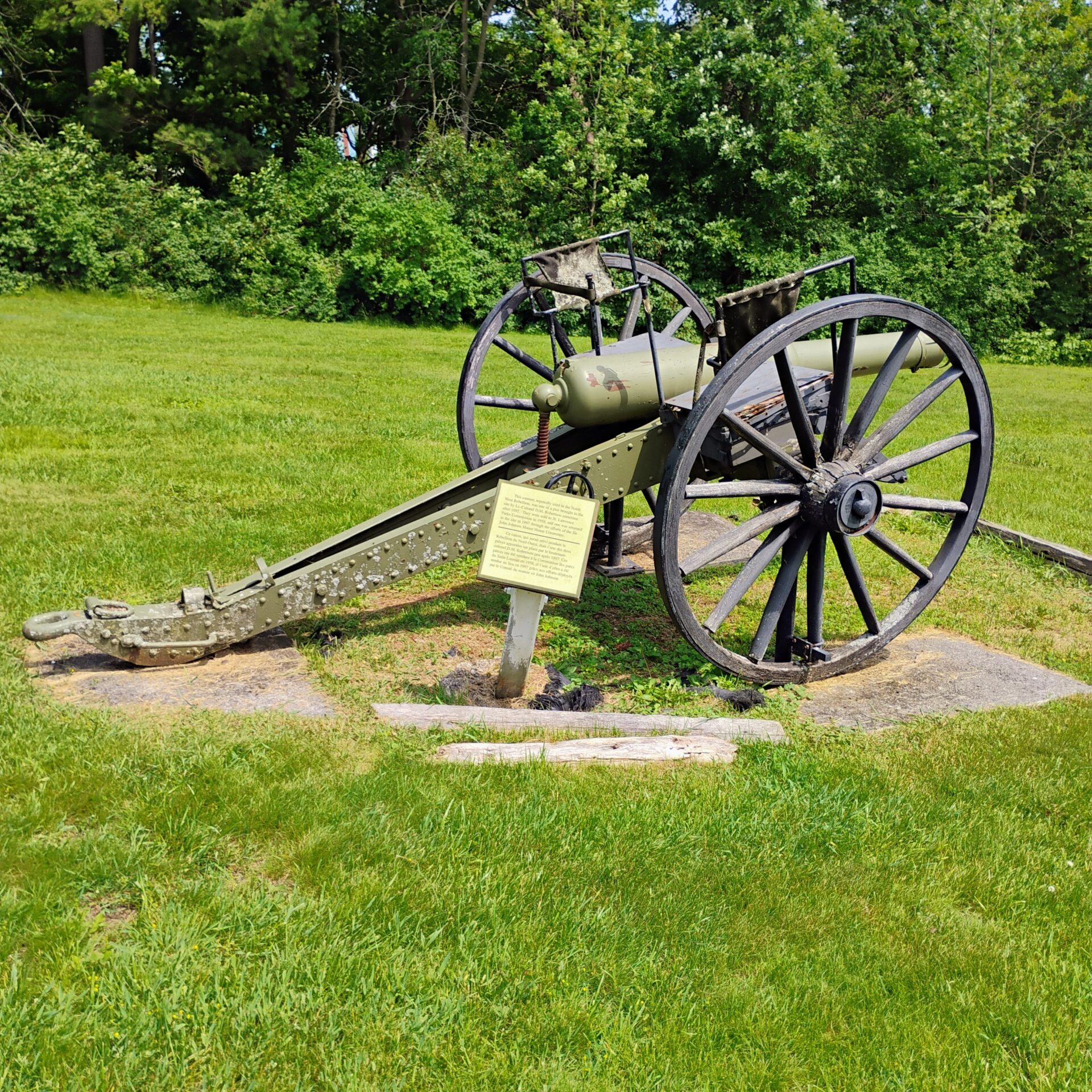
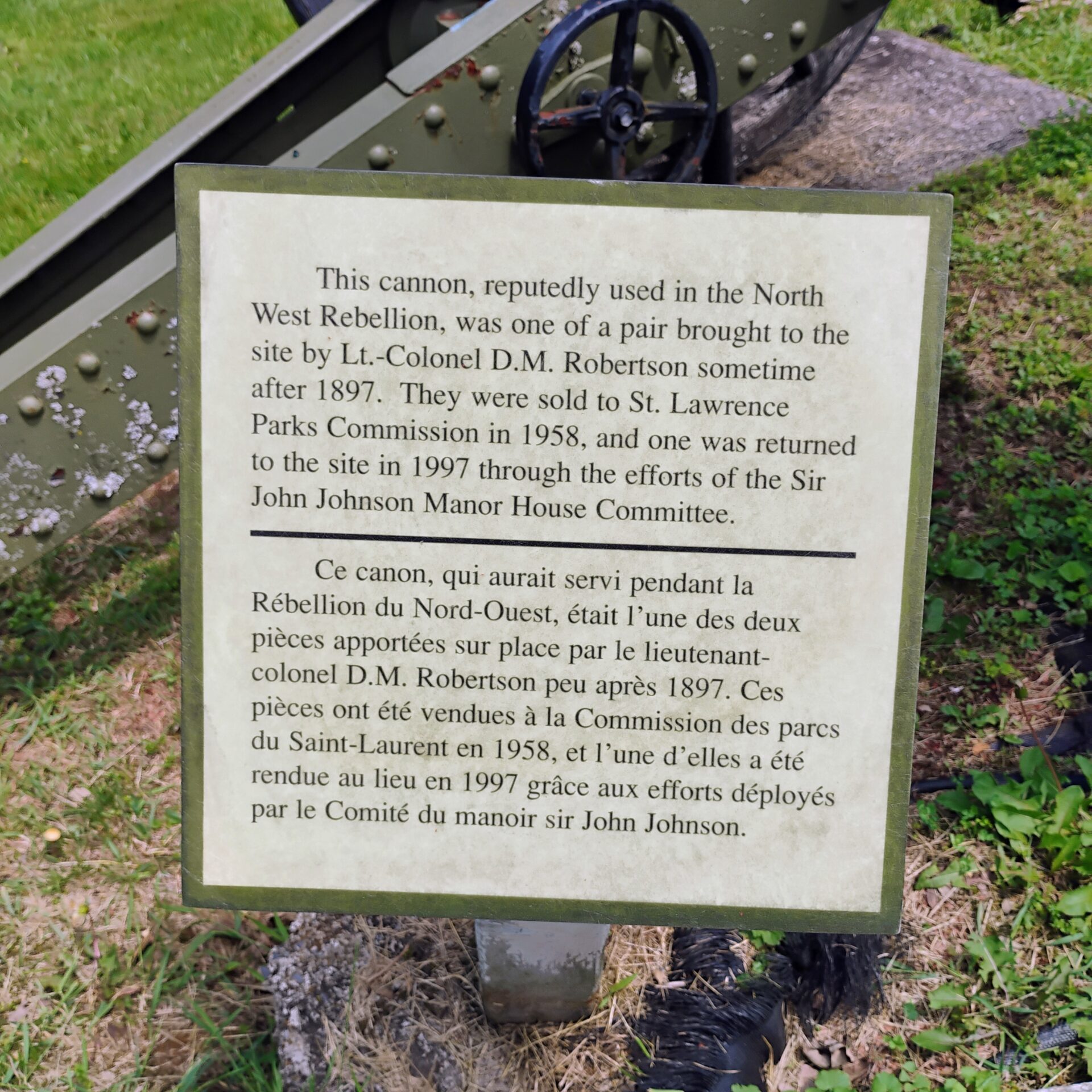
Col. D. M. Robertson | 1897–1938 |
Lionel Devaux | 1938–1956 |
Les Sœurs du Sacré-Cœur | 1956–1971 |
Government of Canada | 1971–2026 |
A Settlement That Helped Build a Community
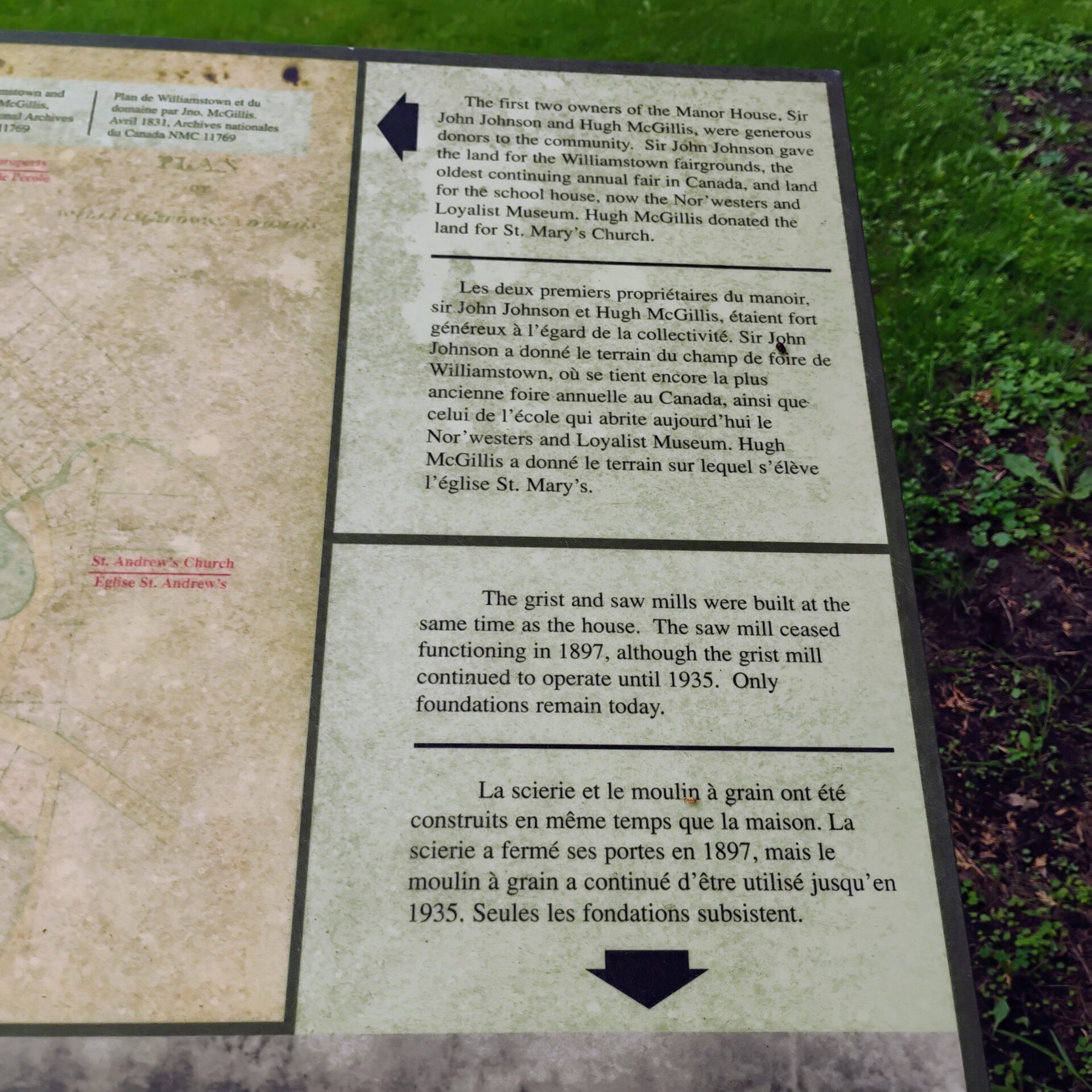
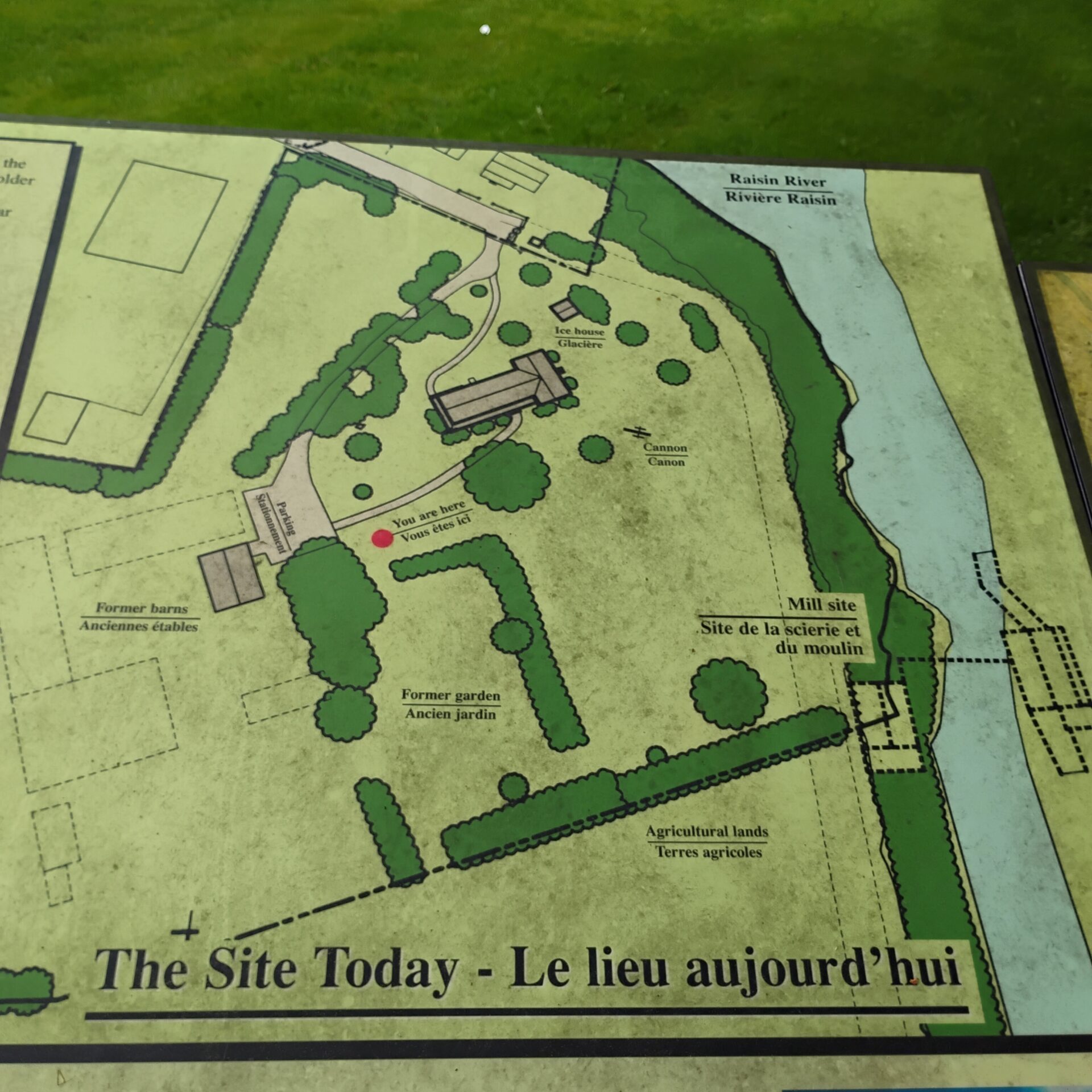
The Manor House was originally part of a larger settlement that included a sawmill and grist mill on the Raisin River. These mills helped attract settlers to the area that later became the village of Williamstown.
The Legacy of the Williamstown Fair
Sir John Johnson donated the land that became the Williamstown Fair Grounds with the condition that an annual agricultural fair would be held there. His goal was to encourage and promote good agricultural practices, innovation, and community development among the settlers of the region.
The first Williamstown Fair was held in 1812. Today, it is recognized as Canada’s Oldest Annual Fair, a distinction earned through more than two centuries of continuous tradition.
For more than 200 years, the fair has continued without missing a year. Throughout its history, it has faced many challenges, including wars, economic hardships, severe weather, and public health emergencies. Despite these obstacles, the fair has remained a consistent and enduring community tradition.
In 2020, during the COVID-19 pandemic, public health restrictions prevented the traditional fair from taking place. Rather than cancelling the event entirely, the St. Lawrence Valley Agricultural Society organized a special drive-thru fair, ensuring that the annual tradition continued in a modified form.
More recently, in 2024, the remnants of Hurricane Debby brought significant flooding to the fairgrounds, with approximately six inches of rain falling on the site. Portions of the grounds, including the Midway and Western Ring, were submerged under more than a foot of water. Through the dedication and hard work of volunteers and organizers, the grounds were pumped out overnight, allowing the fair to proceed with only minor schedule adjustments. Although on-site parking was unavailable, a shuttle service was quickly arranged to accommodate visitors.
The fair’s ability to adapt through changing circumstances has allowed it to maintain its unbroken annual legacy for over two centuries. This achievement reflects not only the original vision of Sir John Johnson but also the ongoing dedication of generations of volunteers who make the fair possible. Volunteers continue to play a vital role each year by organizing exhibits, competitions, entertainment, parking, security, first aid, and many other essential activities.
In 2026, the Williamstown Fair will celebrate its 215th year and will take place from August 7–9, 2026. Thousands of visitors from across Canada travel to Williamstown each year to enjoy agricultural exhibits, entertainment, competitions, local food, and family activities while taking part in a living piece of Canadian history.
The Williamstown Fair remains one of the community’s most cherished traditions and a lasting symbol of resilience, dedication, and pride that continues to define Williamstown today.
Land Ownership in Early Williamstown
When Sir John Johnson established the settlement of Williamstown he owned much of the surrounding land. Settlers could build homes, farms, and businesses, but the land itself remained under the ownership of Sir John Johnson and later the owners of the Sir John Johnson Manor House estate. As a result, many residents owned their buildings but not the land beneath them and were required to pay rent or lease fees to the owner of the Sir John Johnson Manor House. This landholding system played an important role in the early development of the community and reflected the influence that Sir John Johnson and the Manor House had on the growth of Williamstown.
A Unique Construction Method
The oldest section of the house was built using a French-Canadian log-building method known as pièce-sur-pièce, a construction style brought to Eastern Ontario by early settlers.
National Historic Recognition
The Manor House was officially designated a National Historic Site of Canada in 1961 because of its age, architecture, and association with Sir John Johnson.
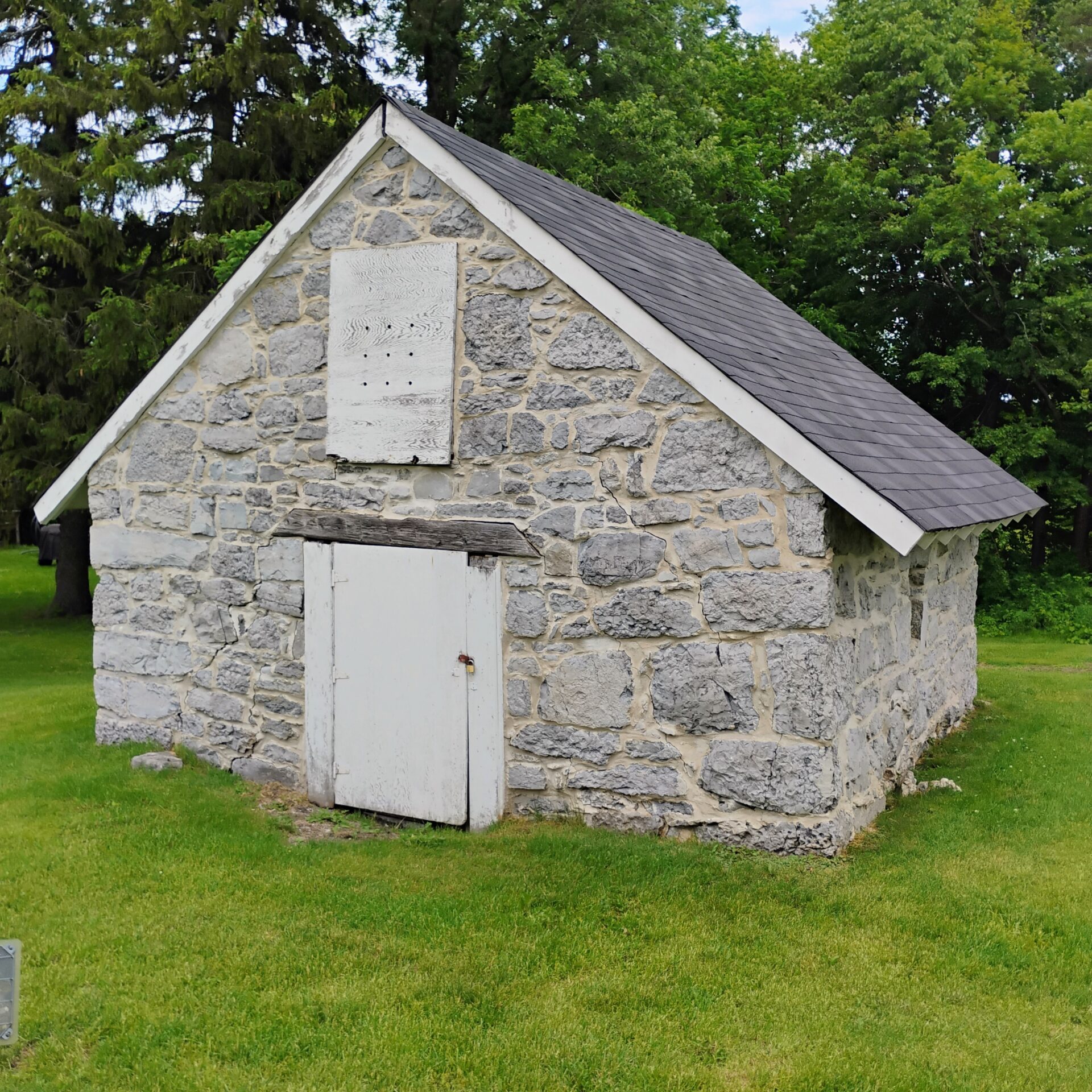
The Historic Ice House
The property still includes a historic ice house, which was once used to preserve food using ice cut from nearby rivers. Although its exact construction date is unknown, it may have been built as early as 1830.
The Great Farm Fire of 1954
As a working farm, the property once contained many outbuildings. In 1954, a devastating fire destroyed two barns, a stable, a garage, a sheep pen, and a piggery. Today, only the remains of their stone foundations can still be seen on the grounds.
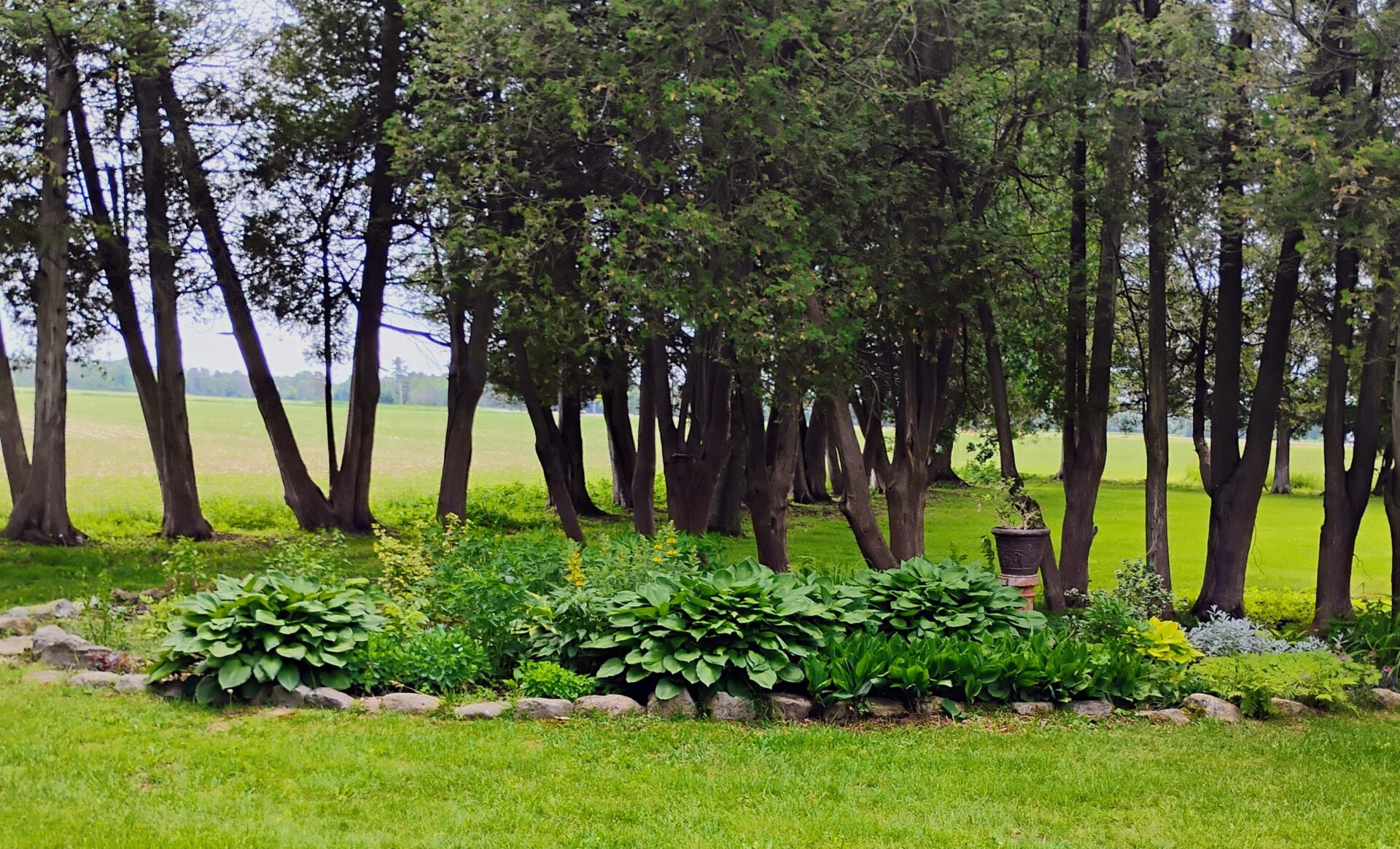
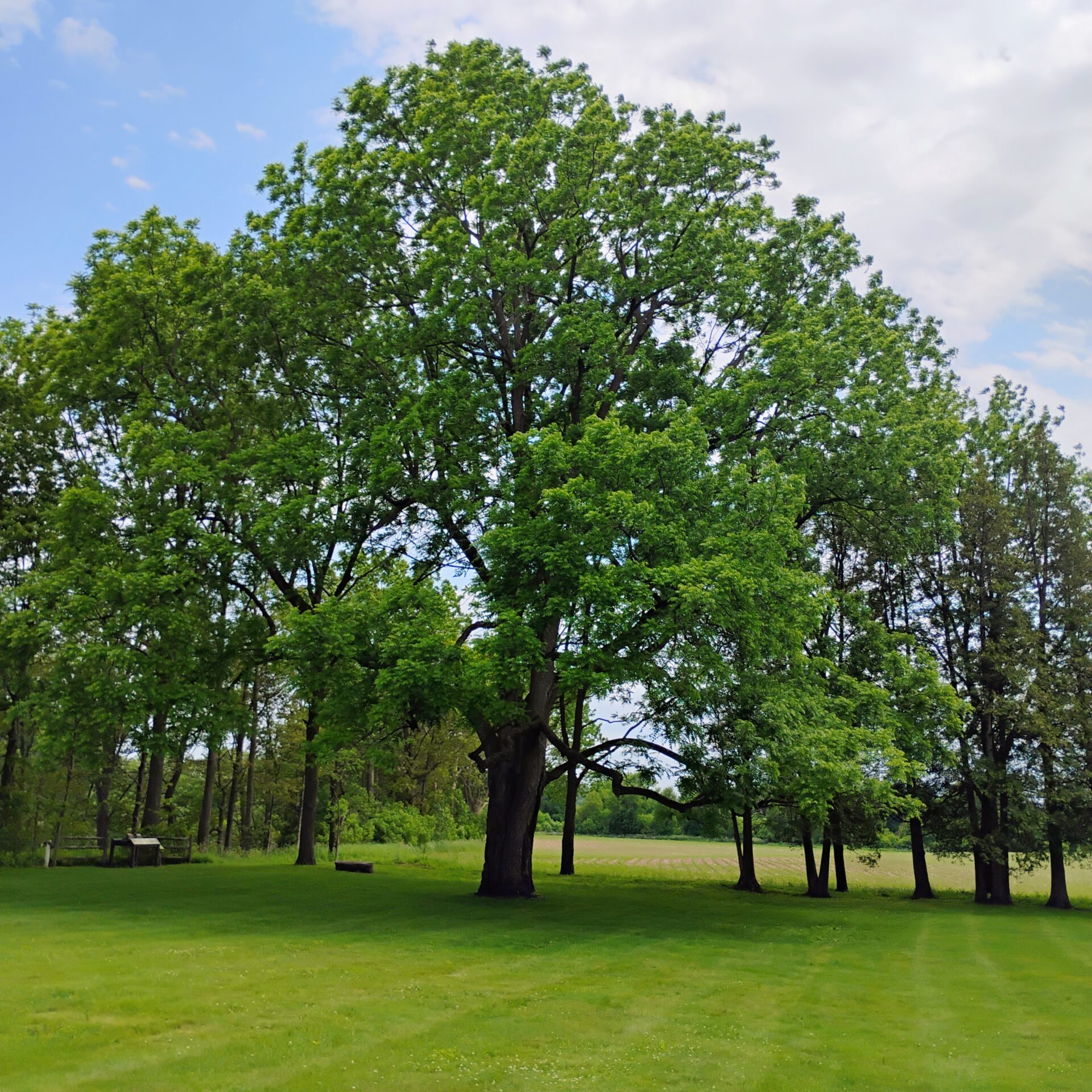
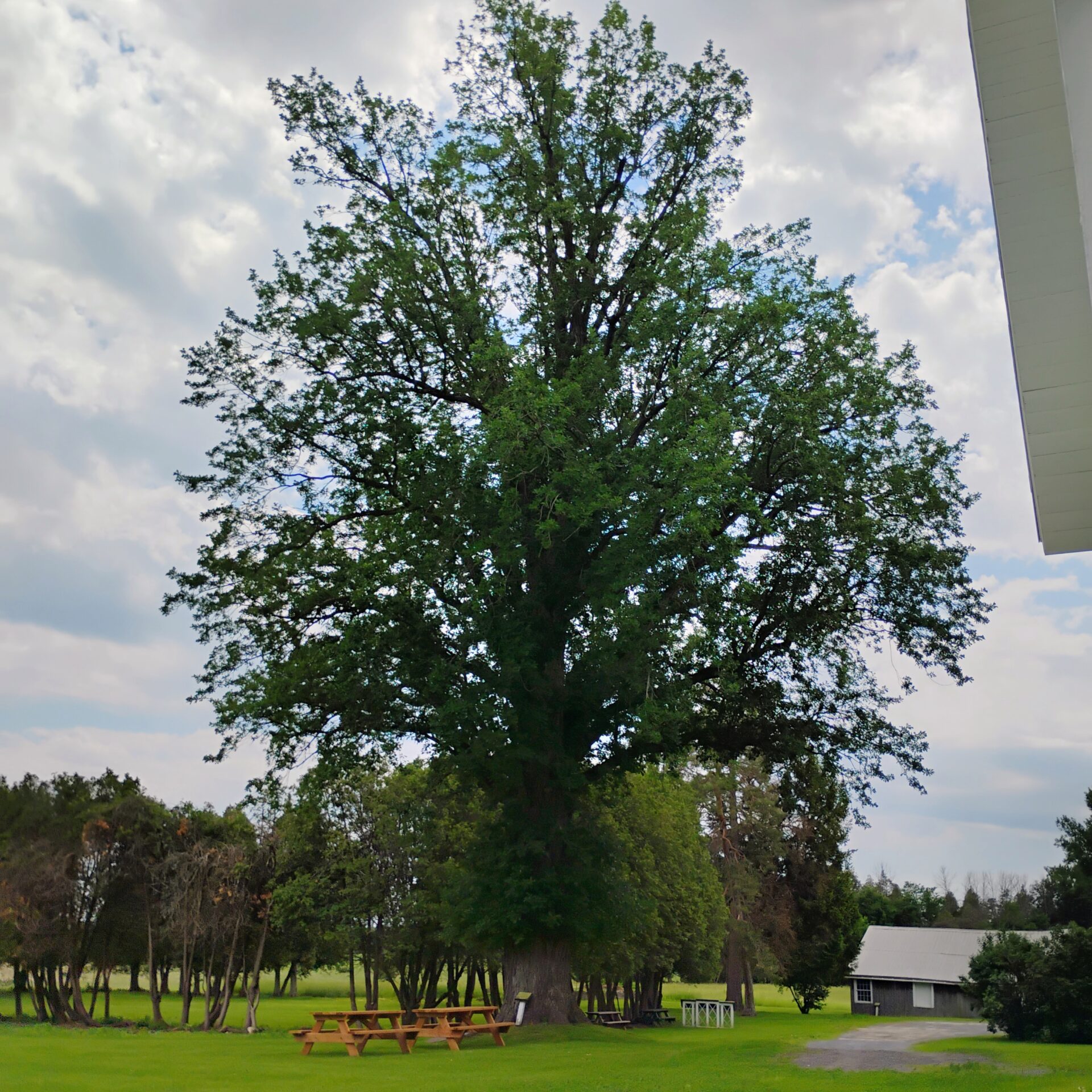
Remarkable Trees on the Property
The grounds are home to some impressive old-growth trees:
– Black Walnut Tree: Approximately 227 years old
– Oak Tree: Approximately 277 years old
Did You Know?
The oak tree on the property is older than the Manor House itself. It was already standing long before construction of the house began in 1784.